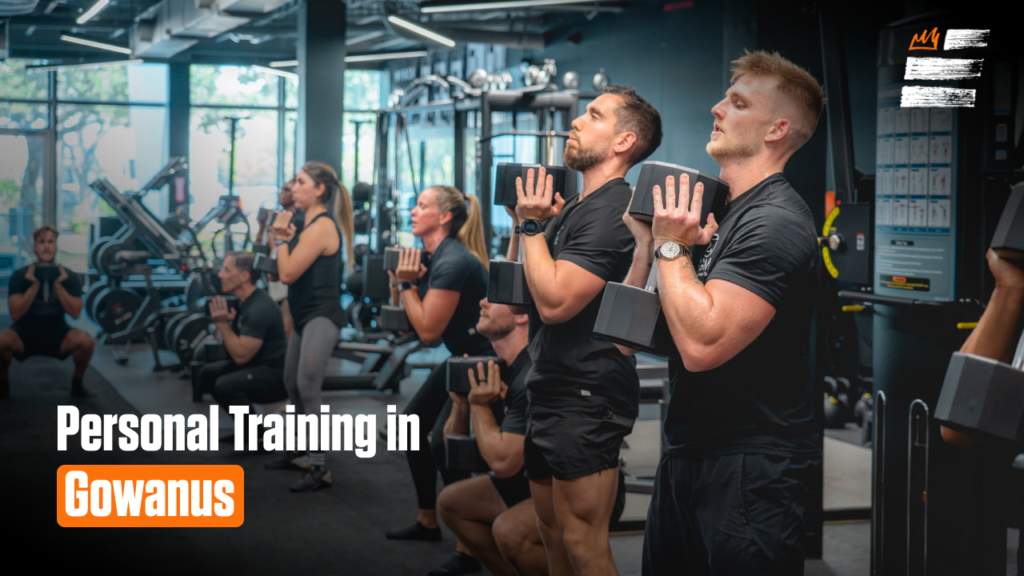
Training in Gowanus works differently than training anywhere else in Brooklyn, and the reason is architectural rather than cultural. Most Brooklyn fitness neighborhoods grew the way retail usually grows: demand arrived, storefronts filled, and studios squeezed into whatever ground floor space was available.
Gowanus went the other direction. The buildings came first, sat empty for decades, and then the training found them.
Here is the position worth stating plainly: Gowanus did not become a fitness hub because of its demographics. It became one because of its ceilings.
What makes Gowanus different from other Brooklyn fitness neighborhoods?
Gowanus is an industrial valley wedged between residential neighborhoods, and that geography drives everything else. The area sits along the Gowanus Canal, bounded by Baltic Street to the north, the Brooklyn-Queens Expressway to the south, Fourth Avenue to the east, and Smith and Hoyt Streets to the west.
Compare that to Park Slope, where the housing stock is nineteenth century brownstone and the commercial space is narrow ground floor retail. A brownstone storefront can hold a boutique studio. It cannot hold a 36,000 square foot climbing wall.
Gowanus inherited the opposite problem, which turned out to be an advantage. Wide, low, structurally overbuilt buildings designed to hold machinery, with nobody left to use them.
Why did warehouses turn out to be ideal gym buildings?
Industrial buildings solve the four constraints that make fitness real estate hard. Think of it like casting a film: most spaces can play the part badly, but a former factory was born for it.
• Vertical clearance. Overhead presses, rope climbs, box jumps, and bouldering walls all need height a residential floor plate does not have. One Gowanus strength gym on Butler Street advertises 24 foot ceilings across 5,000 square feet.
• Open floor plates. Factory floors were built column-light so machinery could be rearranged. That same quality lets a gym reconfigure racks, turf lanes, and platforms without structural work.
• Load bearing floors. Concrete slabs rated for industrial equipment absorb dropped barbells and heavy machines. Wood joists over a residential basement do not.
• Freight access and loading. Ground level roll-up doors mean equipment goes in without a crane, and ventilation retrofits are straightforward.
Add cheap rent during the long post-industrial decline and the pattern explains itself. Artists found these buildings first, in the 1970s and 1980s, for the same reasons: space, light, and tolerance for noise.
Gyms are simply the later tenant in a building type that rewards anyone who needs room and does not mind a freight elevator. The same logic shapes how a training space should actually be laid out.
How did the 2021 rezoning accelerate the fitness cluster?
The Gowanus Neighborhood Plan, approved by City Council on November 10, 2021, opened roughly eighty blocks of former industrial land to mixed use development.
The scale is substantial: more than 8,000 planned housing units and over 650,000 square feet of commercial, retail, and storefront space. That total includes in excess of 100,000 square feet of designated “Gowanus Mix” maker and creative space, a requirement rather than an option.
That matters for training because fitness follows rooftops. Health and wellness operators are among the categories developers actively target for ground floor and second floor space in rezoned corridors, alongside grocers and childcare.
Individual projects show the pattern. 420 Carroll Street pairs roughly 360 apartments with about 27,000 square feet of ground floor retail. The larger Gowanus Wharf development at 175 Third Street runs to roughly one million square feet of mixed use space.
The honest caveat: this is still in progress, not finished. Absorption of that much new retail is unproven, and a corridor can absorb only so many wellness tenants before the category saturates. Anyone opening a studio in Gowanus in 2026 is betting on residents who have not moved in yet.
What kinds of training does Gowanus actually support?
The range is wider than most neighborhoods of comparable size, because different industrial footprints suit different disciplines.
| Training type | What it needs from a building | Typical Gowanus fit |
| Climbing and bouldering | Extreme vertical clearance, multi-floor volume | Large converted warehouse |
| Strength and conditioning | Load bearing floor, open plate, 15+ foot ceilings | Mid-size factory floor |
| Personal training, coached open gym | Flexible zoning, private and shared areas | Subdivided industrial unit |
| Pilates and yoga | Natural light, quiet, modest footprint | Upper floor loft or storefront |
| Martial arts and combat sports | Column-free mat space, high ceilings | Open warehouse bay |
| Recovery, sauna, cold plunge | Plumbing capacity, drainage, ventilation | Ground floor with freight access |
The clustering effect is real. A neighborhood with a climbing gym, a strength facility, and a physical therapy practice within a few blocks lets one person build a full training week without leaving the area.
The Gowanus Mix requirement reinforces this, since mandated maker and creative space produces exactly the kind of odd, flexible, non-storefront units that small training operators can afford.
Who trains in Gowanus, and when?
Gowanus draws from a wider catchment than its own residential population, which is still relatively small compared with the neighborhoods surrounding it.
A gym here pulls from Park Slope, Carroll Gardens, Cobble Hill, Boerum Hill, Prospect Heights, and Red Hook, all within a short walk or a single subway stop. That is the structural advantage of sitting in the middle of a valley: everybody is downhill from somewhere.
Schedules skew toward the two ends of the workday. Facilities in the area commonly run early morning through late evening, with one climbing gym open 7am to 11pm on weekdays and 9am to 10pm on weekends, and reporting that weekday mornings and early afternoons are its quietest windows.
How do you get to Gowanus for a workout?
Transit access is the quiet reason the catchment works. Several subway lines land within walking distance of the corridor, including Hoyt-Schermerhorn on the A, C, and G, Bergen Street on the F and G, and Union Street on the R. The B37, B57, B65, and B103 bus lines also serve the area.
Street parking exists but is limited and unreliable, particularly near active construction. Transit is the practical choice for a scheduled session where arriving on time matters.
What should you look for when choosing a gym in Gowanus?
Judge the building as carefully as the programming, because in a converted industrial space the two are connected.
1. Check the ceiling height against your training. If you do overhead work, olympic lifting, or climbing, low clearance is a hard limit no coaching can fix.
2. Ask about ventilation and heating. Large industrial volumes are expensive to condition. A cavernous space that is freezing in February is a space you will skip in February.
3. Look at the floor. Rubber over concrete handles dropped weight. Rubber over a suspended wood floor does not, and the gym will restrict what you can do.
4. Test the actual commute at your actual training time. A ten minute walk in June is a different proposition in January along an exposed canal.
5. Ask what happens during construction. With active development across the corridor, sidewalk closures and noise are ordinary, not exceptional.
6. Confirm the trial terms. Day passes and intro sessions are common locally, and trying a space beats reading about it.
If you are weighing formats rather than buildings, the difference between coached and self-directed training is the decision that matters more than square footage.
What is the Gowanus Canal cleanup, and does it affect training there?
The Gowanus Canal was designated a federal Superfund site by the U.S. Environmental Protection Agency in 2010, after more than a century of industrial contamination from coal tar, heavy metals, and sewage discharge. Remediation involves dredging, sediment removal, and stormwater retention tanks intended to reduce sewer overflow.
For anyone training in the neighborhood, the practical effects are logistical rather than medical: construction traffic, periodic street work, and ongoing changes to the waterfront edge. The canal is not a swimming venue and never was, but the cleanup is the reason waterfront esplanades and public space are being built into new developments.
Worth flagging honestly: this is an active, multi-decade remediation. Conditions along specific blocks change, and current EPA project updates are the right source for anything time sensitive rather than a general article.
Frequently asked questions
Is Gowanus a good neighborhood for gyms and fitness studios?
Yes, largely because of its building stock. Converted industrial spaces offer high ceilings, open floor plates, load bearing floors, and freight access that residential blocks cannot match.
Its central position between Park Slope, Carroll Gardens, Cobble Hill, and Boerum Hill also gives operators a catchment far larger than the neighborhood’s own population.
What types of gyms are in Gowanus, Brooklyn?
The mix spans climbing and bouldering, strength and conditioning, personal training and coaching open gym models, Pilates, yoga, martial arts, and recovery focused facilities with saunas and cold plunges.
That breadth is a direct consequence of varied industrial footprints. Different former uses suit different disciplines, so one corridor can support formats that would compete for identical storefronts elsewhere.
How do you get to Gowanus by subway?
Several lines serve the corridor. Hoyt-Schermerhorn carries the A, C, and G, Bergen Street carries the F and G, and Union Street carries the R. The B37, B57, B65, and B103 buses also run through the area.
Street parking is limited and complicated by active construction, so transit is generally the more reliable option.
Why are so many warehouses in Gowanus now gyms and studios?
Gowanus was one of Brooklyn’s busiest industrial corridors through the late 1800s and early 1900s, filled with concrete plants, coal yards, and rope manufacturers. Deindustrialization after World War II emptied those buildings.
Artists occupied them first for the space and light. Fitness operators followed for the same structural reasons, plus floors rated to hold heavy equipment.
Did the Gowanus rezoning change the fitness scene?
It accelerated it. The Gowanus Neighborhood Plan, approved November 10, 2021, opened about eighty blocks to mixed use development, with more than 8,000 housing units and over 650,000 square feet of commercial and retail space planned.
Fitness follows residential density, and health and wellness operators are a category developers actively pursue for ground floor space in rezoned corridors.
Is Gowanus safe and pleasant to train in given the canal cleanup?
The Gowanus Canal has been a federal Superfund site since 2010, and remediation is ongoing. For gym-goers the practical impact is construction noise, street work, and changing sidewalk routes rather than any direct exposure concern.
Check current EPA project updates for anything specific to a given block, since conditions shift as work progresses.
Is Gowanus more expensive to train in than nearby neighborhoods?
Pricing varies too much by format to generalize. A climbing membership, a coached open gym plan, and a private training package are different products at different price points, and rates move as the corridor develops.
The reliable approach is comparing per-session cost across a few local facilities rather than trusting a neighborhood average.