
AGE IS INEVITABLE.
DECLINE IS OPTIONAL.
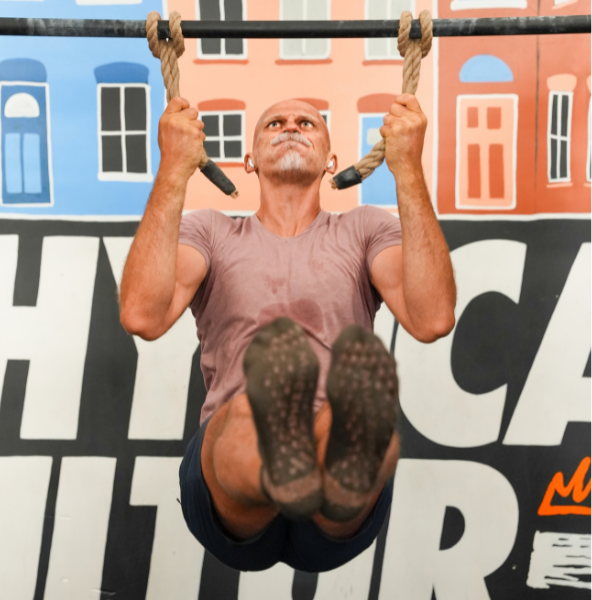
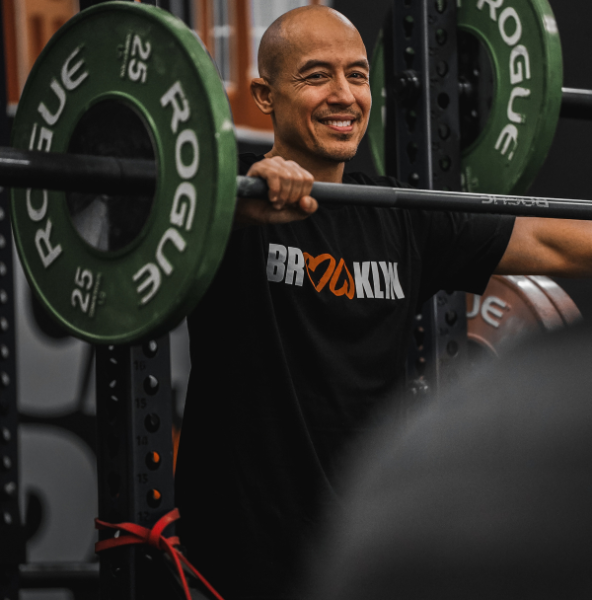
Decline is not a birthday. It is the compounding result of muscle, bone, and balance going untrained, and all three respond to training at every age.
This is preventative health care, done with a barbell. Muscle is your retirement account: strength peaks in your 30s and erodes every decade after unless you keep making deposits. Same for bone density, balance, and the conditioning that keeps your bloodwork moving the right way. Train them consistently and you are far less likely to break down, get sick, or lose the life you built. We assess where you are, then train all of it at the dose your recovery allows.
This is not gentle senior fitness, and it is not reckless either. It is real strength training, scaled to the person in front of us, with retests proving the line is moving the right way.
John and Chantel lead our longevity coaching, and honestly, this is the one specialty every coach on our team works in, because most people who walk through our door want the same things: look good, feel good, stay strong, keep the energy up, and never burn out doing it. Your lead coach owns your program and paces it for the marathon, not the sprint. This is training you can still be doing in twenty years, because that is the point.
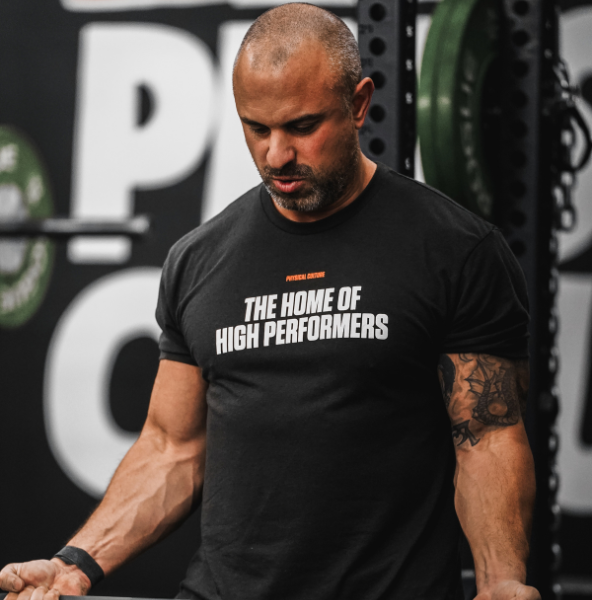
Sustainable is the strategy. If your concern is not here, ask.
The foundation of everything else on this list, built and kept at every age.
Conditioning, bloodwork moving the right way, and stamina that lasts past 5pm.
Mobility, balance, and stability that keep you moving how you used to.
Muscle on, fat off, at a pace you can hold for decades, not weeks.
Loading that builds density, especially through and after menopause.
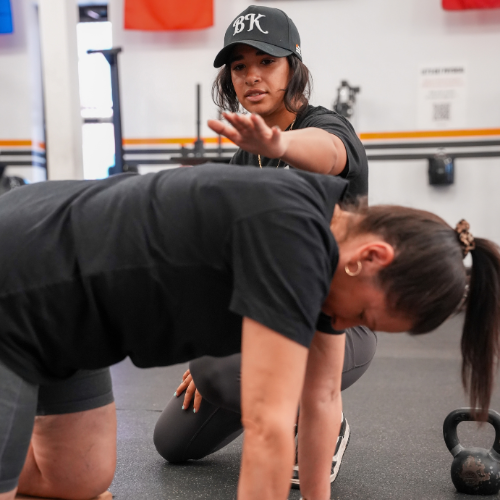
A free consult call to hear where you are, what you want to still be doing in twenty years, and whether we fit.
Your coach measures strength, balance, movement quality, and body composition. Your real baseline, in numbers.
Real strength training at the dose your recovery allows, progressed as your body proves it’s ready.
We retest and keep the numbers climbing. Everything points to one place: a life that stays yours.
Lifespan is how long you live. Healthspan is how long you stay strong, capable, and free from major disease, and it is the part training actually influences. At Physical Culture Brooklyn we train the qualities that decide it: strength, cardiovascular fitness, muscle, bone, and balance. No workout can promise a longer life. The goal is building as much capacity as possible for the years you have, and the earlier you start, the more it compounds.
There isn’t one. The strongest plan combines strength training, cardio, daily movement, and enough balance and mobility work to stay capable. Strength protects muscle, bone, and function. Cardio builds the engine. Walking fills the gaps. The mistake is optimizing one while ignoring the rest. We build the whole system, then emphasize whatever is currently limiting you.
Absolutely. Adults well into their 70s and even 80s gain strength and muscle from progressive training. Recovery changes with age; the ability to adapt does not disappear. The formula stays recognizable: train hard enough to create a reason to adapt, progress it, eat enough protein, recover. Getting older makes muscle more important, not less worth pursuing.
The research target is 150 to 300 minutes of moderate cardio per week, or 75 to 150 vigorous, plus strength training at least twice a week, and balance work as you get older. That is a destination, not an entry requirement. If your life supports two sessions right now, we start there. The best longevity program is not the perfect week. It is the highest-quality week you can actually sustain.
Both, for different jobs. Strength preserves muscle, bone, power, and the ability to physically handle life. Cardio builds the fitness that research ties most strongly to long-term health. You do not need to become a bodybuilder or a marathoner. You need enough strength to stay capable and enough conditioning that everyday life sits comfortably below your ceiling.
VO2 max is your body’s maximum ability to use oxygen, and higher fitness is strongly tied to lower risk of heart disease and early death. It is trainable: easier aerobic work builds the base, harder intervals raise the ceiling. Zone 2 is a useful tool, not a magic zone. We care less about chasing a podcast protocol and more about steadily improving the engine.
Balance is trainable, and falls are a threat to independence, not an inevitable part of aging. Real fall prevention combines balance practice with stronger legs, power, stepping ability, and the confidence to keep moving. We would rather build all of it years before it becomes an emergency. Sudden balance changes, dizziness, or fainting belong with a medical evaluation first.
Yes. The right loading builds bone, and resistance and impact work are core to osteoporosis exercise guidance. Bone adapts slower than muscle, so this is long-game training, not a six-week transformation. With a diagnosis, prior fractures, or medical restrictions, we coordinate around your medical plan and load what is appropriate, rather than treating bones like they should never be challenged.
Often, yes. Exercise is a first-line recommendation for osteoarthritis, and properly dosed strength work tends to improve function and pain rather than wearing the joint out. The key word is dosed: we adjust movements, range, and load around what you tolerate, then progress. New injuries, swelling, or unclear symptoms get assessed, not pushed through. For ongoing conditions, see our Chronic Pain and Chronic Conditions coaching.
More than you think, because protein is what preserves muscle and function. For healthy older adults, expert guidance commonly lands at 1.0 to 1.2 grams per kilogram (about 0.45 to 0.55 grams per pound) of body weight daily, higher if you strength train. We turn that into a realistic daily target instead of making every meal a math problem. Training gives muscle the signal; protein supplies the material. Kidney disease or a clinician-directed restriction changes the conversation.
Every client starts with a free 15-minute consult call. Tell us what you want to keep doing, and we’ll build the plan that gets you there.
Smart. Before you spend a dollar, take our free 5-minute fitness evaluation. We’ll send back your three biggest priorities and what to do about them. You might find out you don’t need us at all.
Take Our Free Fitness Evaluation
Already know you want to talk? Book a free consult.
