
CHAMPIONS ARE BUILT IN THE GYM.
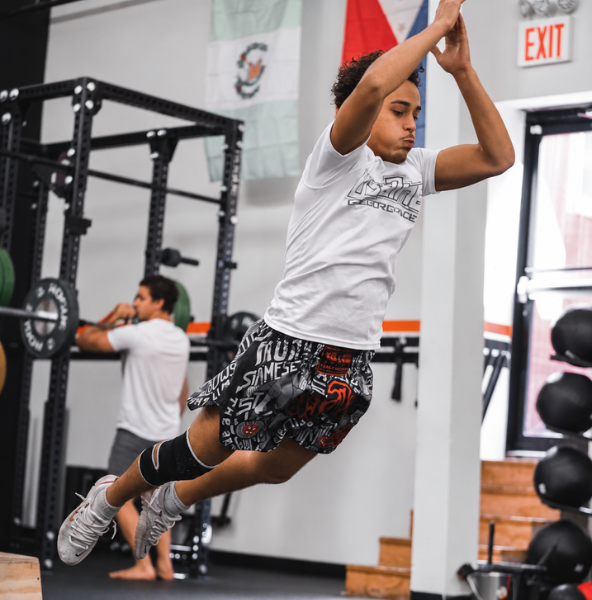
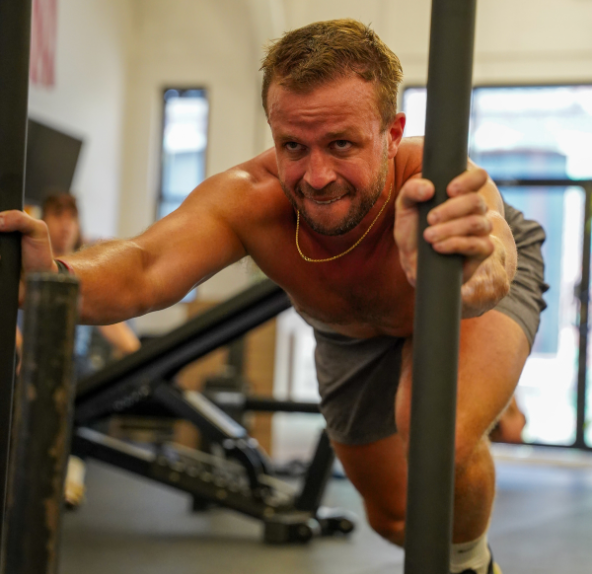
Sports performance training is strength, power, and conditioning built around the demands of your sport and the timing of your season. It is not general fitness with a sport label on it.
Availability is the best ability. The athletes who improve are the ones who stay on the field, so the priority order is durable, strong, fast. We manage load against everything you are already doing. Three games a week, six rounds of jiu jitsu, long travel days. It all counts, and we program around your total volume, not on top of it.
What we measure depends on where you are limited, from force production on the VALD DynaMo Max to body composition on the InBody 580 if you compete in a weight class. Testing is quarterly or sooner. In season, the work keeps you fresh and available. Off season is where we rebuild: nagging injuries, imbalances, explosiveness, weight.
Our coaches have competed, and it shows in how they program. Every athlete gets a lead coach who owns the program and knows the sport. Depending on your schedule, the coach running your sessions may be someone else on the team. That’s by design. Programming and delivery are separate jobs, and our coaches share notes on every athlete instead of working in isolation. Tev leads field and court. Steve leads combat and conditioning. Miles leads rotational sports and return from injury.
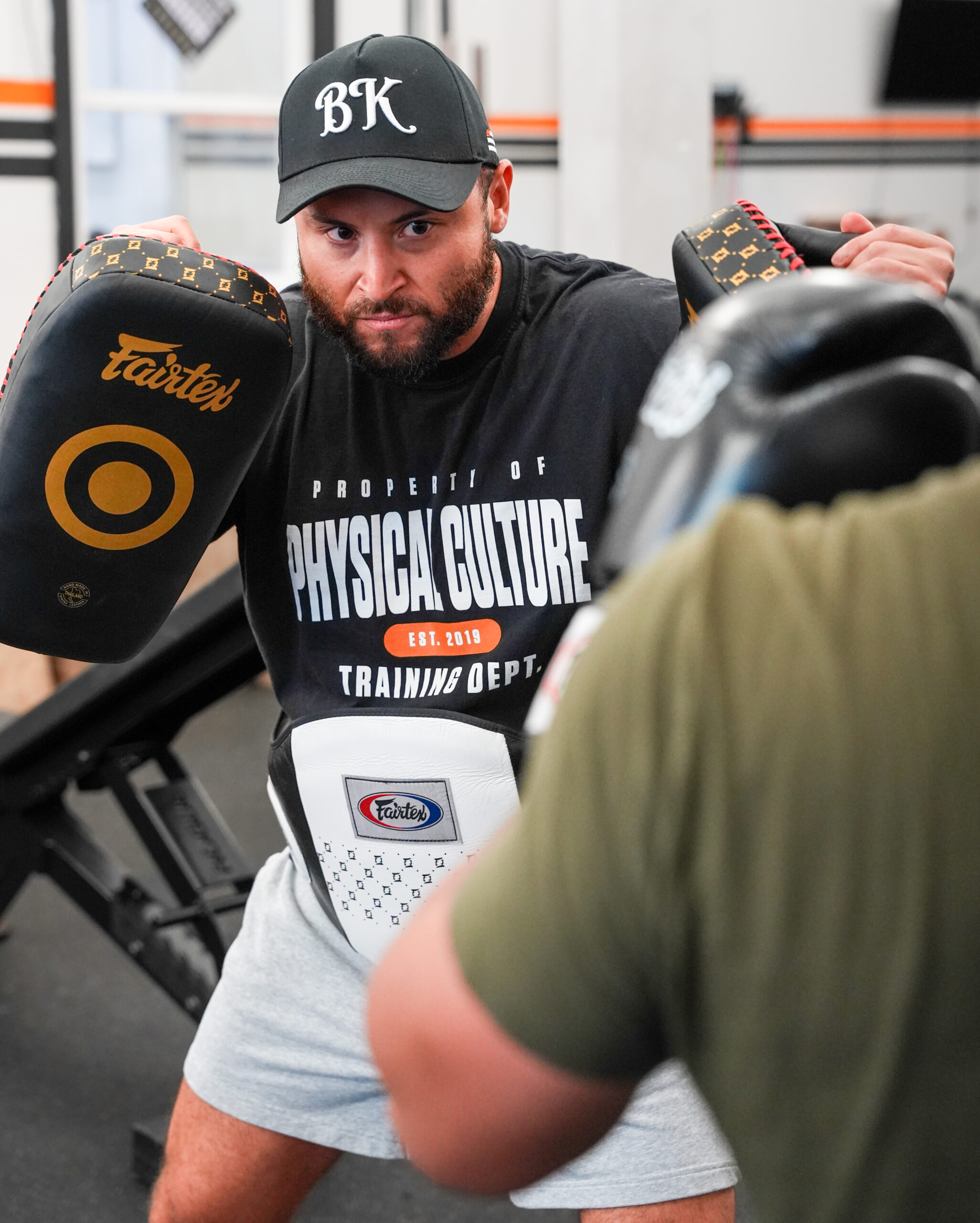
We train skill-sport athletes across five domains. If yours is not here, ask.
Brazilian jiu jitsu, Muay Thai, boxing, MMA. Conditioning, power, and durability from white belt to competition.
Soccer, football, ultimate frisbee. Speed, strength, and staying available through a full season.
Basketball, volleyball, tennis, pickleball. Explosiveness, reactivity, and repeat-sprint capacity.
Baseball, softball, golf, and racquet sports. Rotational power and keeping the shoulder, elbow, and low back healthy.
Sprints, distance, jumps, throws. Force production and speed work that transfers to the event.
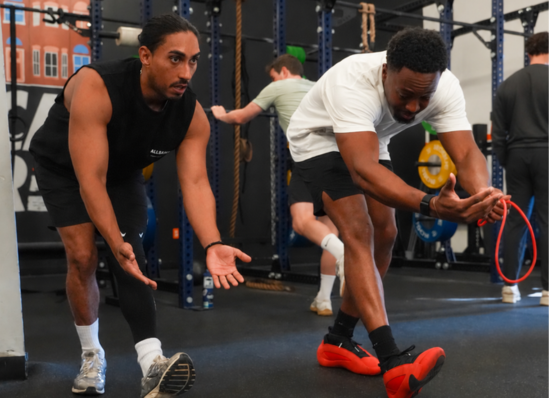
A free call with Brian, our founder. Your sport, your season, your training history, what has broken down before.
Sixty minutes with your coach. Force testing, jump testing, movement screen, body composition.
Programming built to your calendar, delivered through CoachRx, adjusted as your schedule moves.
Quarterly retesting or sooner. If a number moved, we push. If it stalled, we adapt. Everything points to one place: game day.
A regular workout makes you fitter. Sports performance training at Physical Culture Brooklyn starts with what your sport demands and builds the qualities underneath it: strength, speed, power, conditioning, and the durability to tolerate competition. We assess, find what is limiting you, train it, and retest. You do not need to be a professional. If you compete in a league, race, fight, or event and want to perform better, this is your lane.
There is no magic drill. Speed and explosiveness come from sprinting, jumping, throwing, strength, and power work in the right doses, and the right dose depends on what is limiting you. One athlete needs more force. Another is strong but cannot express it fast. The assessment tells us which athlete you are, and the program builds the missing quality. One rule: explosive training stays explosive. Turning every speed session into conditioning defeats the point.
Not when it is programmed correctly. Well-designed strength work improves sprinting, jumping, and force production; the research is consistent. The problem was never lifting. It is excessive volume, unnecessary fatigue, mass you do not need, or gym work crowding out sport practice. We are not building powerlifters. We are building strength you can use when the game speeds up.
There’s no hard rule. Two to three sessions work for many athletes, but practice, competition, and conditioning all draw from the same weekly load, so a crowded season may mean fewer or shorter doses. The goal is not winning the week in the weight room. It is arriving at competition stronger, faster, and ready.
Usually, yes. You spent months building strength and power; abandoning them at the season opener rarely makes sense. What changes is the dose: less unnecessary volume, soreness managed, hard training placed around games so the gym supports game day instead of competing with it. Some seasons are maintenance. Some still make progress. Your schedule decides how aggressive we can be.
The off-season is where we build what the season will not allow: strength, power, speed, useful mass, and rehabbing the nagging injuries you played through. Early blocks build general capacity; as competition approaches, training gets specific to game day. It should not be three months of random punishment. You should finish the off-season more capable, not just more tired.
It reduces risk, but nothing makes an athlete injury-proof. The research supports well-built strength and neuromuscular training for injury risk reduction: stronger tissue, better landing and deceleration, more capacity to absorb chaos. We train those as part of performance, not as a separate pile of tiny prehab exercises. If you are already hurt, that is a different conversation, and your medical providers stay involved.
Often, yes, with clearance from your physician or physical therapist where it is needed, and your notes help us program. Returning from injury and returning to performance are not the same job: rehab restores function, we rebuild what competition demands, and we coordinate with your providers throughout. For post-surgical cases, see our Injury and Post-Surgery Rehab coaching.
Yes, and properly coached strength training is safe for young athletes; well-designed programs do not stunt growth. The conditions: real supervision, technique before load, and motivation that comes from the athlete, not the parent. Youth training is development, not adult training with smaller weights, which is why it has its own program. See our Youth Athletic Development coaching.
The most sport-specific thing you can do is play your sport. The gym has a different job: building the qualities your sport runs on, force, speed, deceleration, rotational power, repeat-effort capacity, whatever your assessment exposes. We do not imitate a tennis swing on a cable machine or train balance tricks on a wobble board and call it game day. Strength work prepares the body. Sport practice teaches you to use it.
Book a free consult. Tell us what you play, when you compete, and where you need help. We will tell you honestly whether this is the right fit.
Smart. Before you spend a dollar, take our free 5-minute fitness evaluation. We’ll send back your three biggest priorities and what to do about them. You might find out you don’t need us at all.
Take Our Free Fitness Evaluation
Already know you want to talk? Book a free consult.
