
STRONG FOR EVERY SEASON.
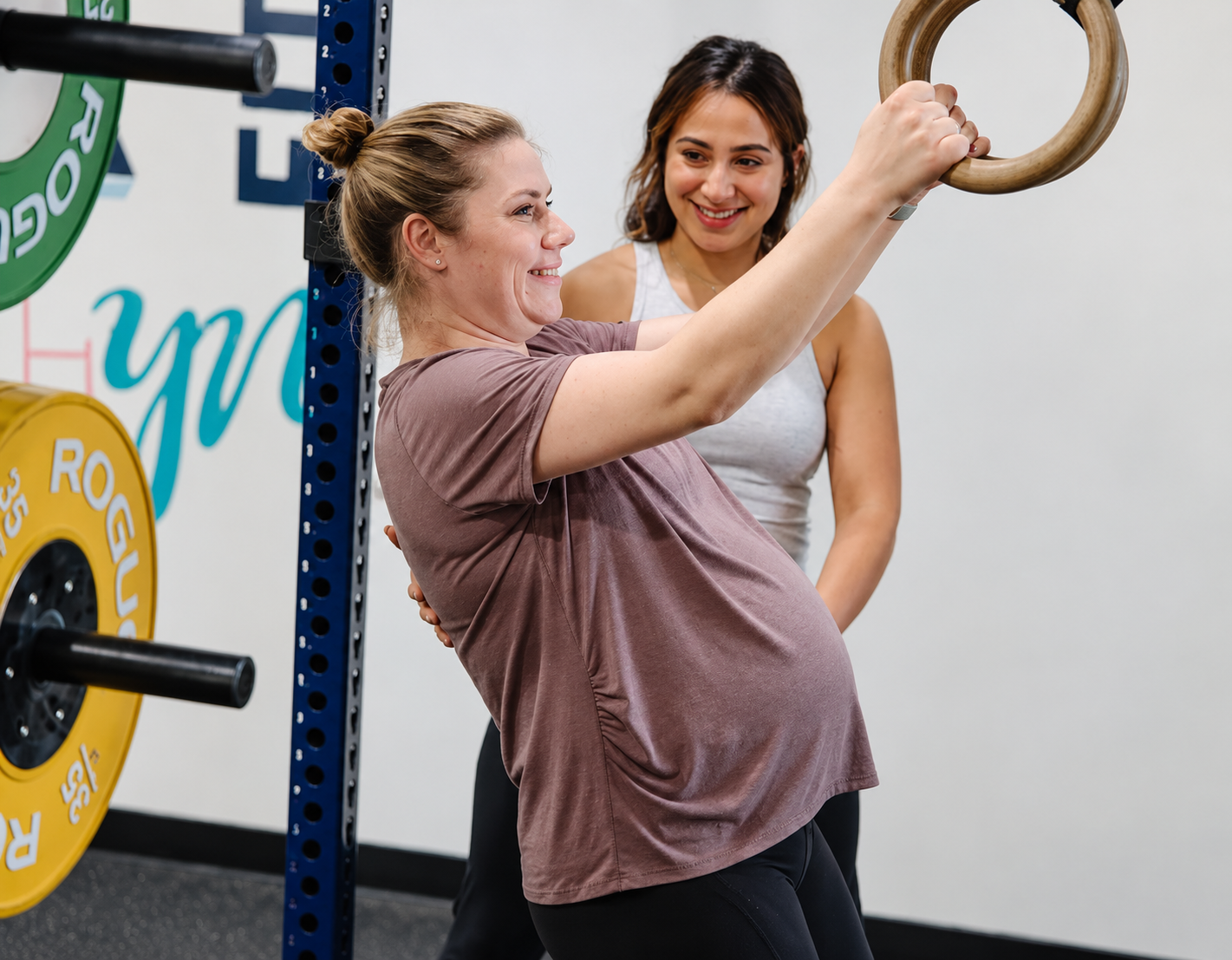
Motherhood is one of the most physically demanding things a body can do. We train it that way.
Pregnancy is preparation: strength, 360 breathing, core stability, and a pelvic floor ready for labor. Postpartum is a rebuild, and every rebuild starts with the new normal. Motherhood puts new demands on your body, so we don’t train to erase what happened. We train for what your life asks of you now.
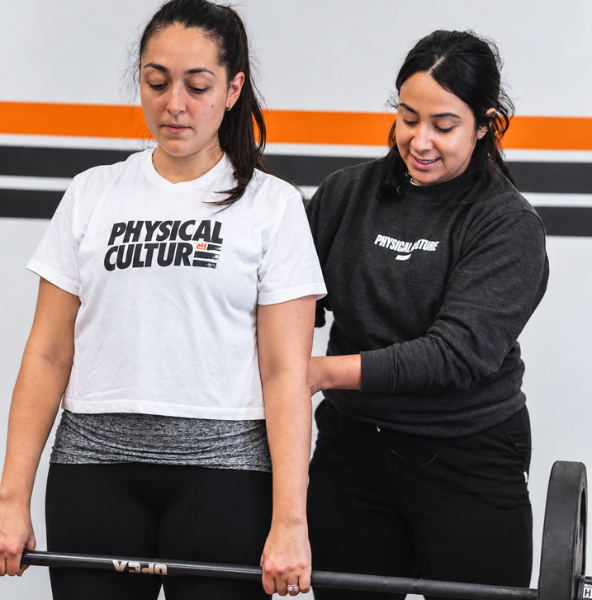
Every pregnancy is different, trimester to trimester and woman to woman, so the program adjusts as you do: some days we push, some days we pull back. And the coaching goes beyond the barbell. Breathing, bracing, habits, nutrition, often the first real education a mother gets in any of it. If you work with an OB, midwife, or pelvic floor physical therapist, we coordinate and share notes, and when a case needs a pelvic floor specialist, we know exactly who to send you to.
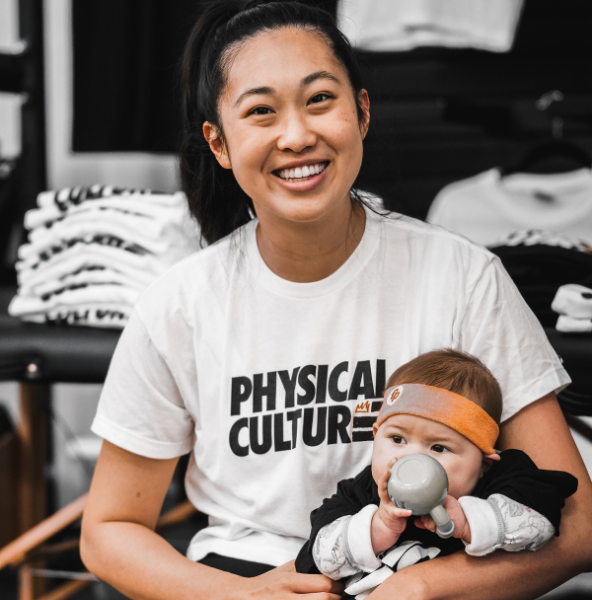
Chantel leads our prenatal, postpartum, and pelvic floor coaching, and has since we opened in 2019. A former physical therapy assistant, she has coached more than 50 women through pregnancy, delivery, and the rebuild after, first-time lifters and lifelong athletes alike. Other supporting coaches back her up, and we coordinate with your OB, midwife, or pelvic floor physical therapist whenever your case calls for it. And yes, you may see babies at the gym!
Pregnancy, birth, and everything after. If your situation is not here, ask.
Strength through all three trimesters, adjusted as your body, your energy, and your pregnancy change.
360 breathing, positioning, and core and pelvic floor stability. Labor is a physical event. We prepare you for it.
The rebuild after delivery, whether you gave birth three months ago or three years ago. Paced by your body, not a timeline.
Leaking, urinary incontinence, pressure, and prolapse symptoms, trained in coordination with pelvic floor physical therapists.
Diastasis recti and rebuilding the core after separation, progressively and without fear, and without a hundred crunches.
A free call with Brian, our founder. Where you are, expecting or postpartum, and what your body has been through.
We measure where you actually are: strength, core function, breathing, and what’s ready to be loaded.
A program built for your trimester or your rebuild stage, adjusted as your body and your energy change.
We retest and progress as you do. Everything points to one place: strong for every season.
For most healthy pregnancies, yes, and at Physical Culture Brooklyn we would go further: it is encouraged, whether you have lifted for years or are starting now. Birth is one of the most physically demanding things a body can do, and in our experience, the women who train consistently report better labors and easier deliveries than the ones who didn’t train at all. Your physician stays in the loop, and pregnancy changes the program, not your permission to train.
There is no forbidden-exercise list and no universal weight limit. The clear restrictions are activities with real fall or impact risk (contact sports, skiing, horseback riding), plus overheating, like hot yoga. Everything else is modification, not prohibition, guided by your trimester, history, and how the pregnancy is going. Strong women do not suddenly need tiny weights. They need intelligent programming, and this is not the season for maxing out.
It builds the capacity you bring to it. Research links regular exercise in pregnancy to better maternal fitness and lower rates of some complications, including cesarean delivery, and strength gives you reserve for birth and everything after. No workout guarantees an easy delivery; birth is not a test you can perfectly train for. The goal is arriving strong, conditioned, and prepared for a process you cannot fully control.
Typically around six weeks with your physician’s clearance, but the six-week visit is a checkpoint, not an automatic green light. After an uncomplicated delivery, walking can start within days as you feel ready; after a C-section or complications, the build takes longer. We have coached women ready at four weeks and women who needed twelve, and both were right. And if your youngest is five, it is not too late. The rebuild is still there.
Readiness beats the calendar. We build strength and low-impact conditioning first, then introduce impact progressively, watching healing, pelvic floor symptoms, sleep, and energy. Leaking, heaviness, or pain that worsens as impact increases means we adjust the plan, not something you push through to prove you are back.
Common and normal are two different things. Pregnancy and childbirth put enormous demands on the pelvic floor, and leaking usually points to muscles that are weak or poorly coordinated, which means it is trainable. The evidence for pelvic floor training is strong. If leaking persists, or comes with heaviness, bulging, or pain, a pelvic floor physical therapist is the right partner, and we work with them constantly.
Training can meaningfully improve it. The research supports core rehab and progressive loading for function (how your trunk braces, lifts, and carries), though how much the gap itself closes varies from woman to woman. We care about what your core can do, not just what it measures, and we build it back through real training. No crunch lists, and no treating your core like it is permanently broken.
Yes, and no: regular training, including lifting, has not been shown to reduce milk production or affect quality. The practical issues are hydration, eating enough to support training and lactation at once, and comfort; many women simply prefer to feed or pump before a session. Breastfeeding raises your recovery demands. It does not put your strength on hold.
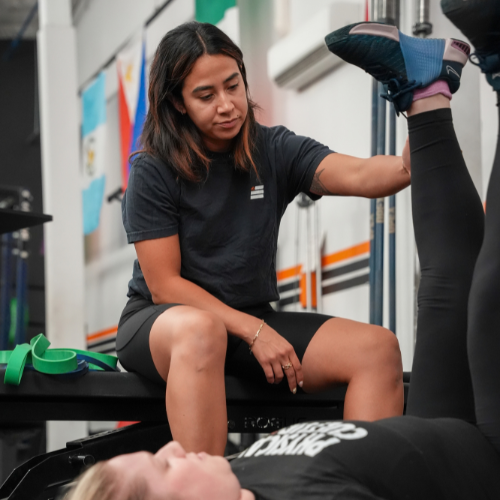
Different jobs, and often the answer is both. A pelvic floor PT evaluates and treats dysfunction: persistent leaking, prolapse symptoms, pelvic pain. We build the strength and confidence around that clinical plan, because once the medical question is handled, you still need a program that gets you lifting, running, and carrying your kid. We coordinate with your providers, and if you need a pelvic floor PT, we have a trusted network we refer to.
Yes. We do not offer child care, and you stay responsible for your little one, but mothers bring newborns and young children regularly, and it is genuinely encouraged. Midday sessions are the quiet hours and the easiest time to train with a baby in tow. Bringing your child should not be the reason you don’t come.
Every client starts the same way: a free consult call with Brian. Expecting, newly postpartum, or years past it, wherever you are, we will meet you there.
Smart. Before you spend a dollar, take our free 5-minute fitness evaluation. We’ll send back your three biggest priorities and what to do about them. You might find out you don’t need us at all.
Take Our Free Fitness Evaluation
Already know you want to talk? Book a free consult.
