
SEPARATE FROM THE PACK.
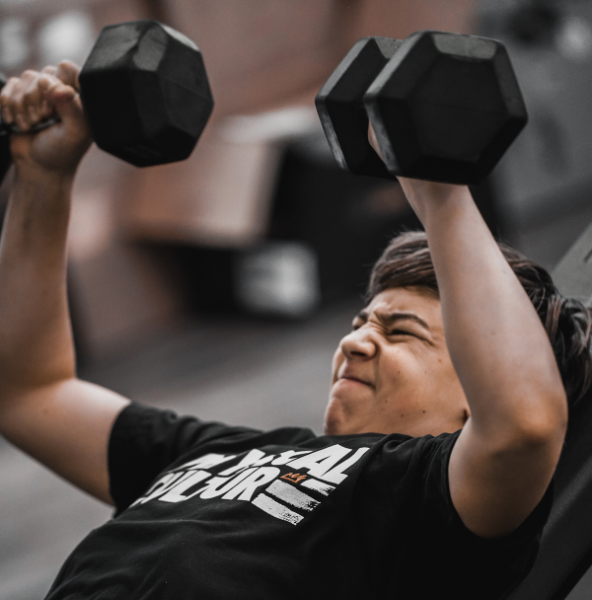
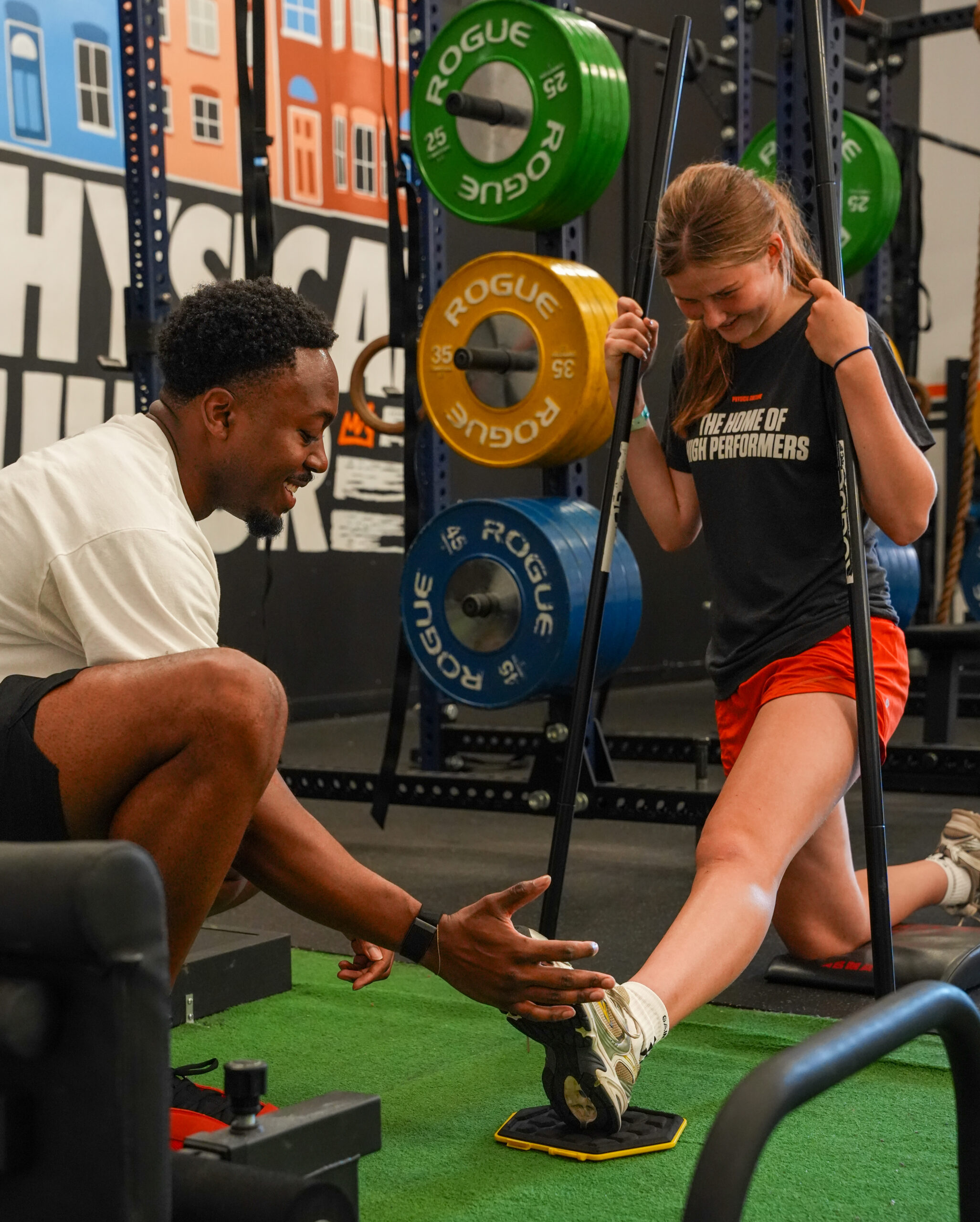
Youth athletic development is age-appropriate strength, speed, and movement training built for where an athlete is in their growth, not a shrunken adult program.
At this age, the job is not specializing. It’s building the general athleticism everything else gets built on: proprioception, balance, stability, explosiveness, resilience. We assess each athlete to find the weaknesses in their kinetic chain, then train them systematically.
Developing bodies do not recover on a schedule. Some athletes can be pushed hard; others need the load managed down while they grow. Your athlete’s coach watches how they respond and adjusts, week to week. That is the difference between development and shortcuts.
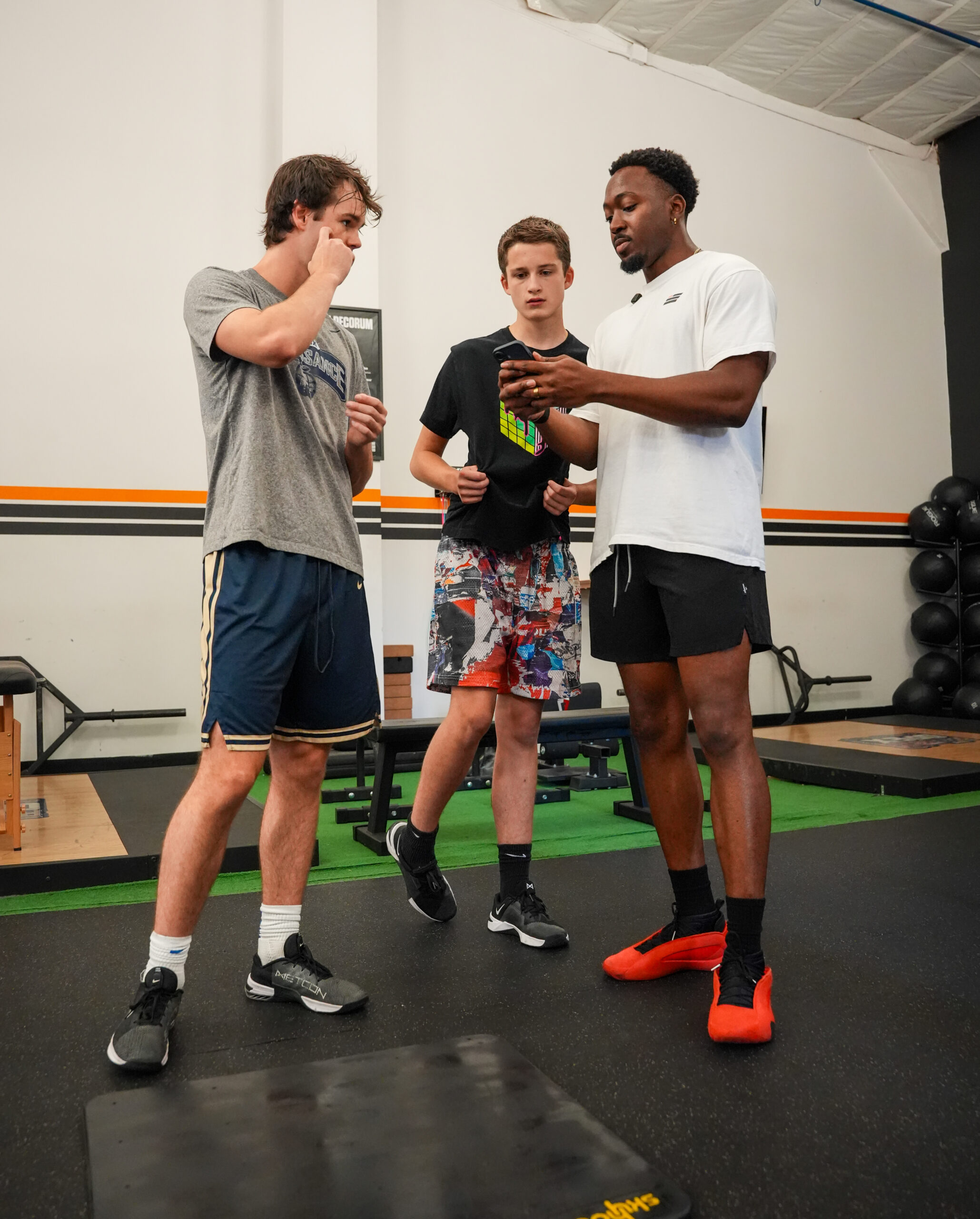
Tev leads our youth athletic development coaching. Behind him is a team that came up through it themselves: travel teams, club sports, college ball. When your athlete’s coach talks about earning a starting spot or coming back from a lost season, it is not theory. Every athlete gets a lead coach who owns the program, and our coaches share notes so nobody develops in isolation. We have coached young athletes across soccer, basketball, baseball, softball, volleyball, football, track and field, golf, and combat sports.
We develop the athletic base underneath every sport. The playbook is your coach’s job. The athlete is ours.
Sprint mechanics, agility, change of direction, first-step quickness.
Age-appropriate loading, taught technique-first. The base everything else is built on.
Jumping, landing, sprinting, throwing. Explosive force their sport can use.
Proprioception, balance, stability, coordination. Quality before quantity.
Durability that keeps athletes on the field, and return to play after injury, in coordination with medical providers.
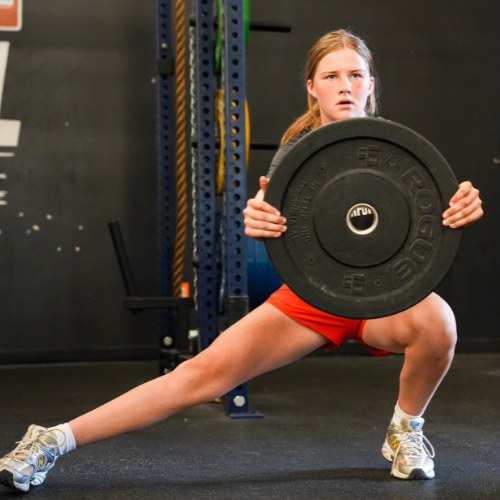
A free consult call with the parent and athlete both in the conversation. Goals, sport, season, fit. The athlete has to want it.
Your athlete’s coach measures strength, power, movement quality, and body composition. Parent and athlete both see the numbers.
A program built around season, practice schedule, and school calendar. In-season, we manage workload. Off-season, we build.
We retest and adjust as your athlete grows. Load moves with the sport calendar and growth itself. Everything points to one place: the next level.
Not adult training with lighter weights. At Physical Culture Brooklyn we build the qualities underneath sport: strength, speed, power, coordination, and the capacity to handle training and competition. Their team coach teaches the sport; we develop the athlete who plays it, and the assessment tells us which quality is missing. The goal is not the best 13-year-old possible. It is the athlete they can become.
There is no magic birthday. A young athlete can start once they can follow coaching, control basic [redacted], and train supervised, which can be before puberty. We typically work with ages 13 to 17 and have coached athletes as young as 12. The weight on the bar is never the point. Learning to produce force and build training habits is.
No. Properly coached resistance training has not been shown to stunt growth or damage healthy growth plates. That fear came from unsupervised lifting and bad loading, not structured youth programs. Kids can get hurt lifting the same way they get hurt playing soccer, which is why coaching matters: technique first, load gradually, no chasing adult numbers.
Yes, and Physical Culture Brooklyn prefers it. Multi-sport athletes develop broader athleticism and fewer overuse injuries. We do ask which sport sits at the top of the hierarchy, because a multi-sport athlete is technically always in season. Training intensity ramps up around lower-priority seasons and pulls back when the main sport demands the most.
Two to three sessions work for many, but school practice, club practice, games, and tournaments all draw from the same weekly load. In-season may mean one or two focused sessions; off-season has room for more. We add the smallest dose that keeps the athlete moving forward, not the biggest one that looks committed.
For most young athletes, multiple sports is a strength. Early specialization is linked to more overuse injuries; we generally point toward the second half of high school before narrowing. The flip side counts too: three sports on three teams at once can still be too much. We watch the total workload, not the number of jerseys creating it.
There is no universal number. Growth, school, sleep, and stress all draw from the same tank. The signals worth taking seriously: persistent pain, declining performance, constant fatigue, or losing enthusiasm for a sport they normally love. Development happens when training stress is followed by enough recovery to adapt. Overwhelming an athlete is not toughness.
Often, yes. Their physician or physical therapist handles diagnosis and clearance; we rebuild what sport requires and coordinate with the providers involved. Being cleared to participate and being ready to perform are not the same thing. Bridging that gap is the job, and the training itself reduces future injury risk.
Then we would rather you wait. The athlete has to want to be here; it cannot be the parent’s decision. Kids pushed into the gym burn out on it. Kids who choose it build something that lasts past high school. If your athlete is not asking yet, keep the door open and come back when they do.
Because you are the parent. A kid can hear the same instruction a hundred times from a parent, even one who played at a high level, and it lands differently from an independent coach. That is not a knock on you; it is how teenagers work. It gives our coaches room to push your athlete, and it gives you your job back: support, resources, and keeping it fun.
Usually not. The foundation is food that supports growth and training, plus hydration and sleep. A shake can be convenient, but the powder is not the performance, and supplements carry contamination concerns that matter in tested sport. Food first. Restrictive eating, unexplained weight loss, or persistent fatigue goes to a pediatric professional.
Every athlete starts the same way: a free 15-minute consult call with you and your athlete both on the line. If they want it, we’ll build the rest.
Smart. Before you spend a dollar, take our free 5-minute fitness evaluation. We’ll send back your three biggest priorities and what to do about them. You might find out you don’t need us at all.
Take Our Free Fitness Evaluation
Already know you want to talk? Book a free consult.
