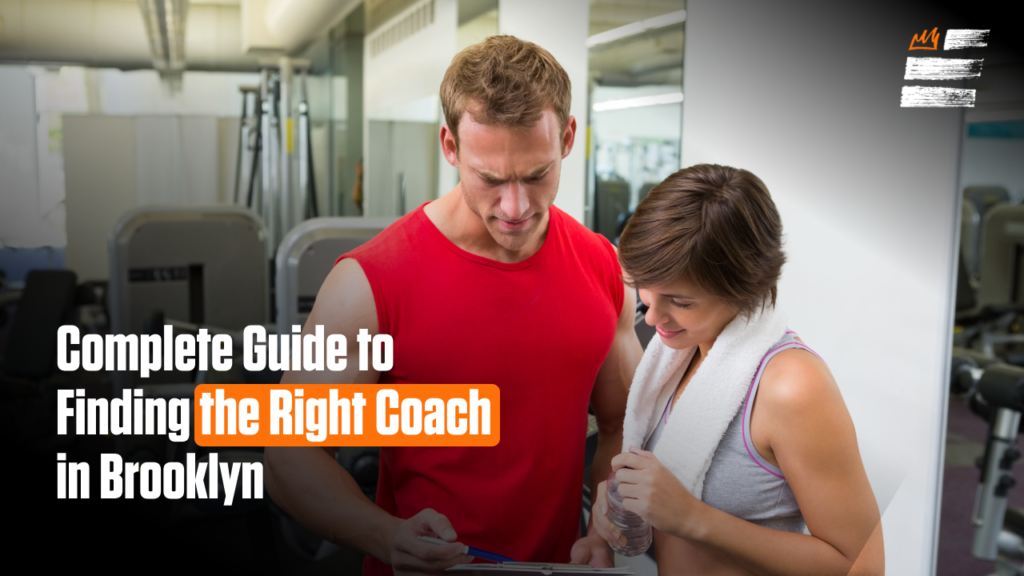
If you search for a personal trainer in Brooklyn, you will find hundreds of options within a few miles of Gowanus alone. Big box gyms, boutique studios, in-home trainers, climbing gyms with add-on coaching, and independent coaches renting space by the hour. Everyone claims to be the best personal trainer in Brooklyn, the choice is overwhelming, and the stakes are real. The right coach can change your life. The wrong one wastes your money and, worse, your motivation.
We have spent more than six years coaching over 500 professionals, parents, and athletes here in Brooklyn, and we have heard every story about what went wrong at the last gym. This guide covers everything we wish people knew before starting personal training in Brooklyn: what personal training actually includes, what it costs in NYC, the different formats available, and the exact questions that separate a great coach from a mediocre one.
What Personal Training Actually Is (and What It Is Not)
At its best, personal training is not someone counting your reps. It is a professional relationship built around a plan. A qualified coach assesses where you are, understands where you want to go, and builds a program that gets you there safely, then adjusts that program as your life happens.
A proper coaching engagement should include:
A real assessment before any workout. Before you touch a barbell, a good trainer reviews your training history, medical history, and nutrition habits. At our gym, every new client completes a body composition scan to establish a baseline for muscle mass and body fat, plus a movement screen to identify pain, imbalances, or limitations. If a trainer throws you into a hard workout on day one with no assessment, that is a red flag, not a compliment to your fitness.
A personalized program, not a template. Your program should reflect your goals, your schedule, your injury history, and your equipment access. A 38-year-old dad recovering from a herniated disc should not be training like a 24-year-old marathoner, even if they both said “get stronger” on the intake form.
Progression you can see. Strength training works through progressive overload, meaning the demands on your body increase gradually over time. Your coach should track your lifts, your body composition, and how you feel, and should be able to show you the trend.
Adjustment when life happens. Kids get sick. Work explodes. You tweak your back moving a couch. Coaching that only exists inside a scheduled hour falls apart the moment your schedule does. Look for a coach who adapts the plan rather than guilt-tripping you for missing it.
The Main Types of Personal Training in Brooklyn
Brooklyn offers more training formats than almost anywhere in the country. Each has genuine strengths and real tradeoffs.
1-on-1 Private Training
The classic model of 1-on-1 personal training in Brooklyn: you and your coach, every session. This is the fastest way to learn proper technique, the safest option if you are managing an injury, and the most personalized experience available. It is also the most expensive per hour. If you are brand new to lifting, dealing with pain, or preparing for something specific like a postpartum return to exercise, this is usually where to start.
Hybrid Coaching (Private Sessions Plus Coached Open Gym)
Hybrid personal training is a newer model that we use at Physical Culture, and one we think fits Brooklyn life better than anything else. You work 1-on-1 with a dedicated coach who writes your personalized program, then you train through a mix of private sessions and coached open gym time, where a coach is on the floor to check your form and answer questions while you work through your own plan.
The advantage is cost and flexibility. You get expert programming and regular coaching contact without paying private session rates for every single workout. For busy professionals and parents who cannot commit to the same three time slots every week, this flexibility is often the difference between consistency and quitting.
Small Group and Semi-Private Training
Two to four people share a coach, sometimes on the same program, sometimes on individual programs run side by side. It is more affordable than private personal training and adds a social element many people love. The tradeoff is less individual attention, which matters more if you have injuries or very specific goals.
Group Fitness Classes
Classes at places like strength studios and HIIT gyms are fun, energetic, and affordable. But a class is a workout, not a program. The instructor cannot watch your squat when there are 20 people in the room, and the workout is not built around your body or your goals. Classes work well as a supplement. They work poorly as a substitute for coaching if you have a specific goal or an injury history.
In-Home Training
Several companies send trainers to your apartment. The convenience is real, especially for parents. The limitation is equipment: there is only so much progress you can make with a few dumbbells and bands in a living room. In-home training suits general fitness and mobility work better than serious strength development.
What a Personal Trainer Costs in Brooklyn?
Personal trainer costs in NYC are the highest in the country. Expect to pay roughly $90 to $200 per session for qualified 1-on-1 coaching, with most experienced Brooklyn coaches falling between $100 and $160. Big box gym trainers sit at the lower end, specialist coaches with clinical credentials at the higher end. Hybrid and semi-private models typically bring the effective monthly cost down significantly compared to buying every session privately.
Rather than fixating on the per-session price, calculate the monthly total for the level of support you actually need, and weigh it against what you are getting: programming, coaching contact, assessment and re-testing, and nutrition guidance. A cheap trainer you see once a week with no program is usually worse value than a slightly pricier engagement with a real system behind it.
We break down NYC pricing in detail, including what should be included at each price point, in our guide to personal trainer costs in NYC.
The Credentials That Matter (and the Ones That Do Not)
Anyone can print business cards that say “personal trainer.” Here is how to tell the professionals from the hobbyists.
Baseline certifications. Look for NASM, NSCA (CSCS), ACSM, or ACE. These require real study and continuing education. A weekend certification from an unknown organization is not equivalent.
Specialist qualifications for special situations. If you have specific needs, look for matching expertise. Post-injury training is best handled by someone with clinical training, such as a coach with a Master’s in Exercise Science or an ATC (Athletic Trainer, Certified) credential. Prenatal and postpartum training should come from a coach with specific women’s health education, since programming around pregnancy, diastasis recti, and pelvic floor recovery is genuinely different.
Experience with people like you. A great coach for college athletes may be a poor fit for a 45-year-old executive with a desk-job back. Ask directly: “How many clients like me have you worked with, and what results did they get?”
What does not matter: how shredded the trainer looks, their Instagram following, or how exhausting their workouts are. Soreness is not a training outcome. Progress is.
Ten Questions to Ask Before You Hire a Brooklyn Trainer
Bring these to your consultation or discovery call. The answers will tell you almost everything.
- What does your assessment process look like before we start training?
- How do you build my program, and will I be able to see it?
- How do you track progress beyond the scale?
- What happens when I miss a session or travel for work?
- Have you worked with clients with my specific situation (injury, pregnancy, age, sport)?
- What are your certifications, and what continuing education have you done recently?
- Do you offer nutrition and lifestyle guidance, or only workouts?
- What does a typical month cost, all in?
- Can I speak to a current or former client like me?
- What happens if it is not a good fit?
A confident, experienced coach will welcome every one of these questions. Evasiveness on assessment, programming, or pricing is your cue to keep looking.
Red Flags to Walk Away From
- No assessment before training. You cannot program for a body you have not evaluated.
- The same workout for every client. Watch the floor. If everyone is doing identical sessions, nobody is getting personal training.
- Pain dismissed as weakness. “Push through it” is how minor issues become chronic ones. Pain is information, and a good coach adjusts around it. If you are already dealing with discomfort, start with our guide on returning to workouts safely after an injury before hiring anyone.
- Crash-diet nutrition advice. Extreme restriction is a churn strategy, not a coaching philosophy.
- Pressure to buy big packages on day one. Legitimate coaches earn long-term clients through results, not through locking you in before you have trained together.
How to Choose Between Neighborhood Options
Location matters more than most people admit. A perfect gym that requires a 40-minute commute will lose to a good gym ten minutes from home, every single time, because the best program is the one you actually show up for.
If you live in Park Slope, Carroll Gardens, Cobble Hill, Boerum Hill, Red Hook, Brooklyn Heights, or Prospect Heights, the Gowanus corridor is worth a look. It has quietly become the home of the dedicated personal training gym in Brooklyn, with large industrial spaces that fit real equipment, and it sits within a 15-minute reach of all of those neighborhoods. Our own gym is at 55 Ninth Street, near the Smith-9th and 4th Ave-9th St stations.
Wherever you look, do a trial session or paid assessment before committing to a package. One hour on the floor with a coach tells you more than any website.
What Realistic Results Look Like
Be suspicious of anyone promising a transformation in 30 days. Here is what honest timelines look like for a consistent client training two to three times per week:
- Weeks 1 to 4: Movement quality improves, everyday aches often ease, energy rises, and the gym stops feeling intimidating.
- Months 2 to 3: Visible strength gains. Weights that felt heavy in week one become warm-ups. Body composition begins shifting.
- Months 4 to 6: Changes other people notice. Meaningful muscle gain, fat loss, and a measurable difference on a body composition scan.
- Beyond 6 months: Compounding returns. This is where training stops being a project and becomes part of who you are.We cover the science behind these timelines in our article on how long it takes to build muscle.
The Bottom Line
The right personal trainer in Brooklyn is the one who assesses before programming, programs before training, tracks what matters, adapts when your life changes, and has proven experience with people like you, at a location and price you can sustain for years rather than weeks.
If you are in or near Gowanus and want to see what that looks like in practice, book a free 30-minute discovery call with Brian, our owner and head coach. You will talk through your goals, training history, and schedule, and leave with a clear picture of the right path forward, whether that path is with us or not.