
What You Need To Know
Body composition is the breakdown of your weight into fat mass and lean body mass, which covers muscle, bone, organs and water.
- Two people with the same weight and BMI can carry very different health risks, because BMI can’t tell fat from muscle.
- In 2023, the American Medical Association called BMI alone an imperfect measure and recommended adding body composition and visceral fat measurements.
- The American Council on Exercise puts average body fat percentage at 18% to 24% for men and 25% to 31% for women.
- A DEXA scan is the most precise common body composition test. InBody and other bioelectrical impedance devices are faster, cheaper and great for tracking change.
- You improve body composition with strength training, enough protein, good sleep and, if fat loss is the goal, a modest calorie deficit.
Your bathroom scale gives you one number. It can’t tell you whether that number is muscle you worked hard for or fat that’s quietly raising your health risk.
That’s the gap body composition fills, and it’s why we don’t start any client’s program with a scale.
Body composition definition: body composition is the proportion of fat mass to lean body mass in your body. Lean mass includes skeletal muscle, bone, organs and water. It’s usually reported as body fat percentage, and it says far more about your health than weight alone.
Written by Brian Velez, owner of Physical Culture, a private coaching gym in Gowanus, Brooklyn. Every new client at our gym starts with an InBody 580 body composition scan, and we retest at least every quarter.
What is body composition? The parts that make up your weight
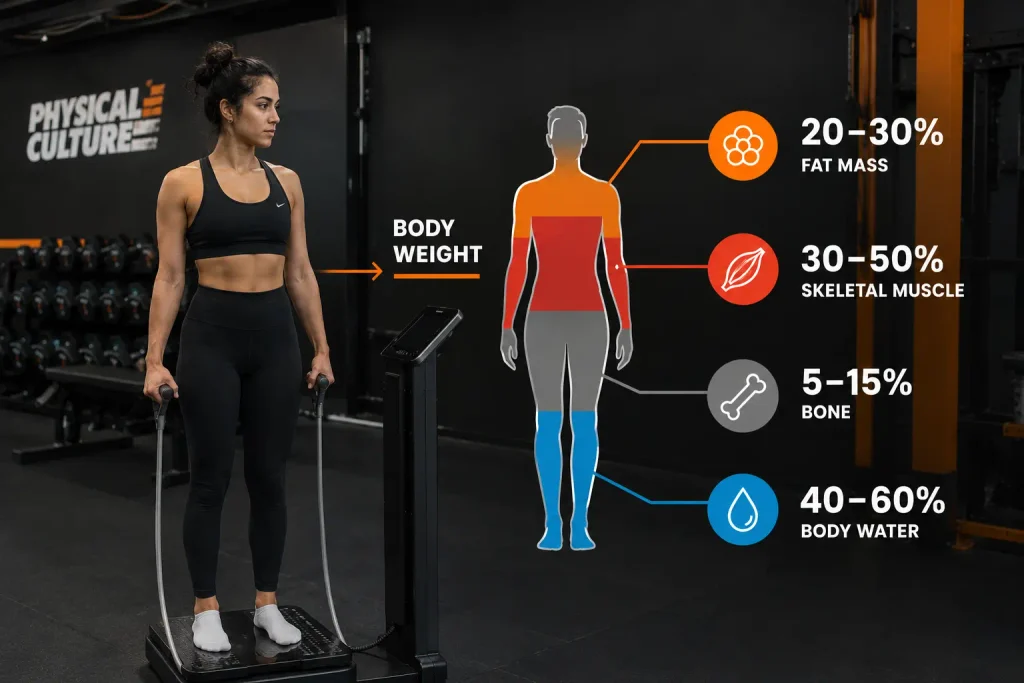
Body composition is what your body weight is actually made of. Most methods split it into two compartments: fat mass and fat-free mass, which is also called lean body mass.
- Fat mass: all the fat tissue in your body. Some is essential fat your organs and hormones need; the rest is stored energy.
- Lean body mass: everything that isn’t fat, including muscle, bone, organs and water.
- Skeletal muscle mass: the muscle attached to your bones, the part you can actually train. Skeletal muscle is the number we watch most closely.
- Body water: a large share of your weight, held inside and outside your cells. Hydration changes how some scans read you.
- Bone mineral: the mineral content of your skeleton. Bone density is best measured with a DEXA scan.
Think of your body like a house. Your weight is the total weight of the building. Body composition tells you how much of it is frame, plumbing and furniture, which matters far more if you want to know whether it’s built to last.
Fat mass vs lean mass: what’s the difference?
The main difference between fat mass and lean mass is what they do. Lean mass, especially muscle, moves you, protects your joints and helps your body handle blood sugar. Fat mostly stores energy and makes hormones.
One quick vocabulary note. Lean body mass includes organs, bone and water, while lean muscle mass refers only to muscle. When we talk about building muscle mass, we mean skeletal muscle.
Visceral fat vs subcutaneous fat
Not all fat is equal. Subcutaneous fat sits just under your skin; it’s the fat you can pinch. Visceral fat sits deep in your abdomen, wrapped around your organs.
Visceral fat is the riskier of the two, which is why the AMA lists visceral fat measurements among the tools doctors should use alongside BMI. An InBody scan reports a visceral fat level, so you can track it over time.
Why does body composition matter more than weight?
Body composition matters more than weight because the same weight can hide very different health profiles. Muscle and fat affect your metabolism, strength and disease risk in opposite directions.
Picture two women who are both 5 feet 9 inches tall and weigh 165 pounds. Both have a BMI of about 24.
One lifts three times a week and carries most of her weight as muscle; the other has lost muscle over years of desk work and dieting. Their scale numbers match. Their health doesn’t.
Here’s why the difference matters:
- Metabolic rate: your resting metabolic rate is the calories you burn doing nothing at all. Muscle is more metabolically active than fat, so more muscle supports a higher resting metabolic rate.
- Aging: muscle mass declines with age unless you train it. Losing it costs strength, balance and independence.
- Hidden muscle loss: fast dieting, illness or GLP-1 medications can strip muscle along with fat. The scale calls that progress. A body composition test shows the truth.
- Obesity risk: obesity is about excess fat, not excess weight. A muscular person can be heavy without carrying unhealthy fat.
We’ll say it plainly: we’d rather a client gain two pounds of muscle and see no change on the scale than lose five pounds the wrong way.
If you’re on a GLP-1, our guide to preventing muscle loss on Ozempic or Wegovy covers how to protect it.
Body composition vs BMI: what’s the difference?
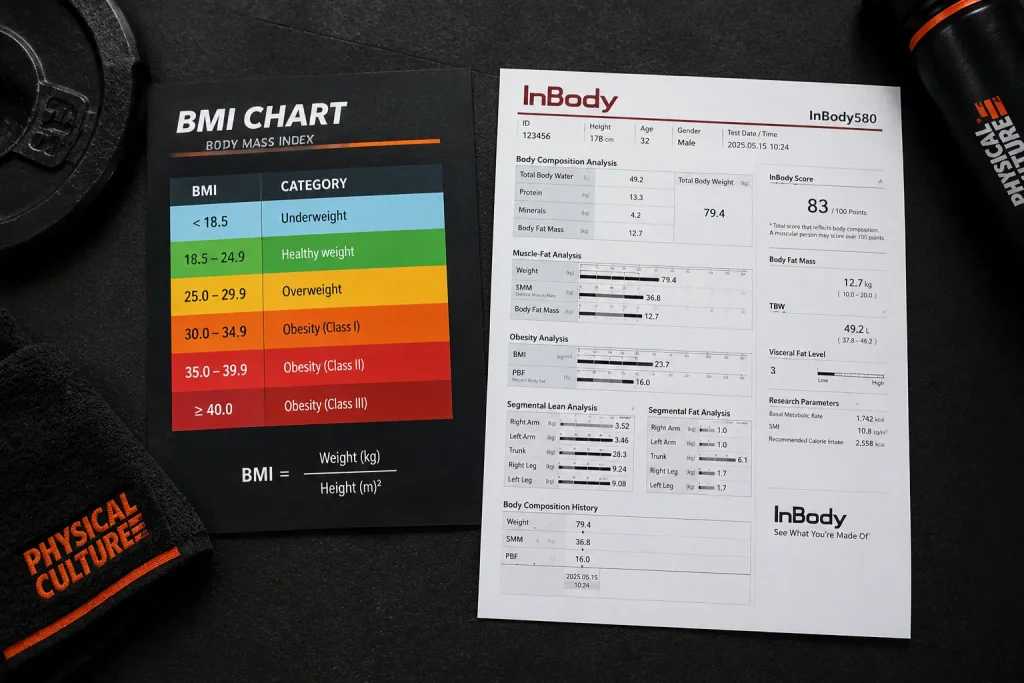
The difference between body composition and BMI is what they measure. BMI is a ratio of your weight to your height. Body composition measures what that weight is made of.
| Factor | BMI | Body composition |
| What it measures | Weight relative to height | Fat mass, lean mass, water and sometimes bone |
| How it’s calculated | Weight (kg) divided by height (m) squared | DEXA scan, InBody, calipers or other tests |
| Tells muscle from fat | No | Yes |
| Shows visceral fat | No | Some methods do |
| Equipment needed | A scale and a tape measure | A body composition device or clinic |
| Best use | Quick population screening | Tracking an individual’s health and training |
The medical world is catching up. In June 2023, the American Medical Association adopted a policy calling BMI an imperfect way to measure body fat. It recommended using BMI alongside other measures, including visceral fat, body composition and waist circumference.
BMI also misreads whole groups. As Axios reported, citing the CDC, women tend to carry more body fat than men at the same BMI, and older adults more than younger ones.
No scanner at home? Your waist-to-hip ratio is a free risk check. Divide your waist measurement by your hip measurement; a higher waist-to-hip ratio points to more fat stored around your middle.What is a healthy body fat percentage?
A healthy body fat percentage for most adults falls around 14% to 24% for men and 21% to 31% for women. Those are the fitness and average ranges from the American Council on Exercise (ACE).
| ACE category | Women | Men |
| Essential fat | 10% to 13% | 2% to 5% |
| Athletes | 14% to 20% | 6% to 13% |
| Fitness | 21% to 24% | 14% to 17% |
| Average | 25% to 31% | 18% to 24% |
| Obese | 32% and above | 25% and above |
Women carry more essential fat than men because it supports hormones and reproductive health. That’s normal, not a flaw.
Lower isn’t always better. ACE notes that body fat below 14% for women or 6% for men may be dangerously low. These ranges also don’t adjust for age, so treat them as a starting point rather than a verdict.
Our honest take: your trend matters more than any single reading. Going from 33% to 28% while getting stronger is a huge win, even if you never hit an athlete’s number.
How is body composition measured? Comparing body composition tests
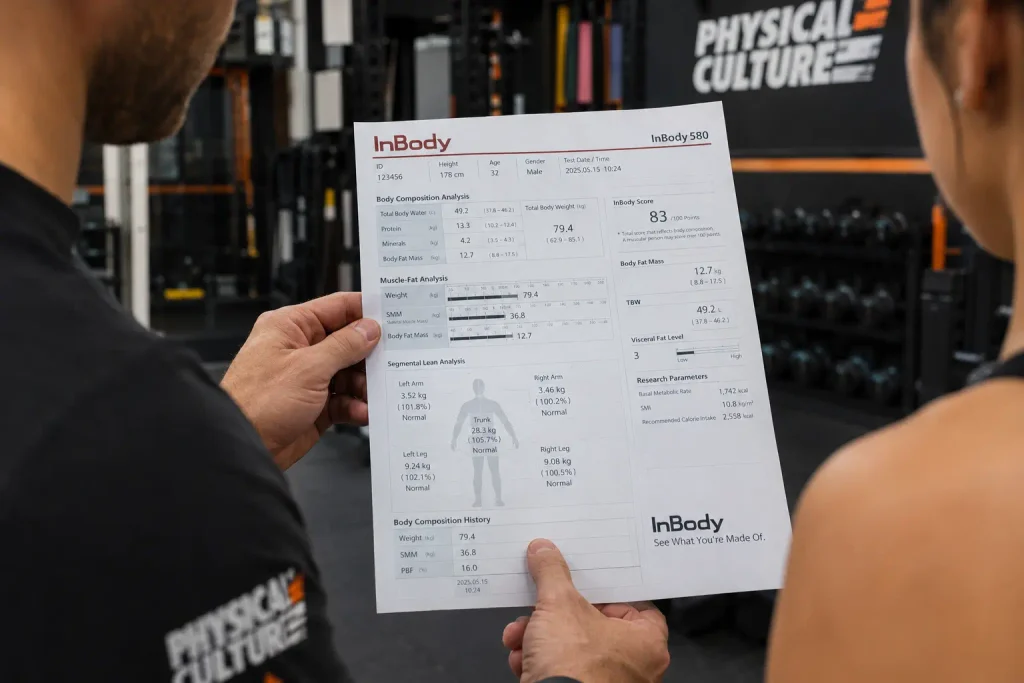
The most common body composition tests are DEXA scans, bioelectrical impedance devices like InBody, skinfold calipers, and water or air displacement methods. Each trades off precision, cost and convenience.
| Body composition test | How it works | Best for | Watch out for |
| DEXA scan | Low-dose X-ray separates fat, lean tissue and bone | Precision and bone density | Clinic visit, higher cost, small radiation dose |
| InBody (bioelectrical impedance) | A small electrical current passes through the body; water-rich muscle conducts better than fat | Fast, repeatable tracking by body segment | Hydration and meal timing shift readings |
| Skinfold calipers | Measures pinched skin thickness at set sites | Cheap field estimates | Accuracy depends on the tester |
| Hydrostatic weighing or Bod Pod | Estimates body density from water or air displacement | Research settings | Hard to find, not segmental |
| Smart home scale | Foot-to-foot bioelectrical impedance | Daily trends at home | Least precise of the group |
Bioelectrical impedance has limits worth knowing. A 2025 study in the Journal of Strength and Conditioning Research noted that it can be less valid than DEXA for tracking muscle gain, and that hydration and meal timing can skew results.
That’s why consistency beats precision for most people. A DEXA scan once a year and an InBody scan every quarter, taken under the same conditions, tell you more than one perfect test.
What does an InBody scan show?
An InBody scan shows your muscle mass, body fat percentage, hydration and visceral fat level. Our InBody 580 breaks them out arm by arm, leg by leg and across your trunk, so you can see imbalances too.
For the most accurate InBody reading, follow these rules:
- Test at the same time of day, ideally in the morning.
- Skip a workout and a big meal for a few hours beforehand.
- Keep your hydration normal; don’t chug water right before.
- Compare each scan to your own last result, not someone else’s.
How do you improve your body composition?
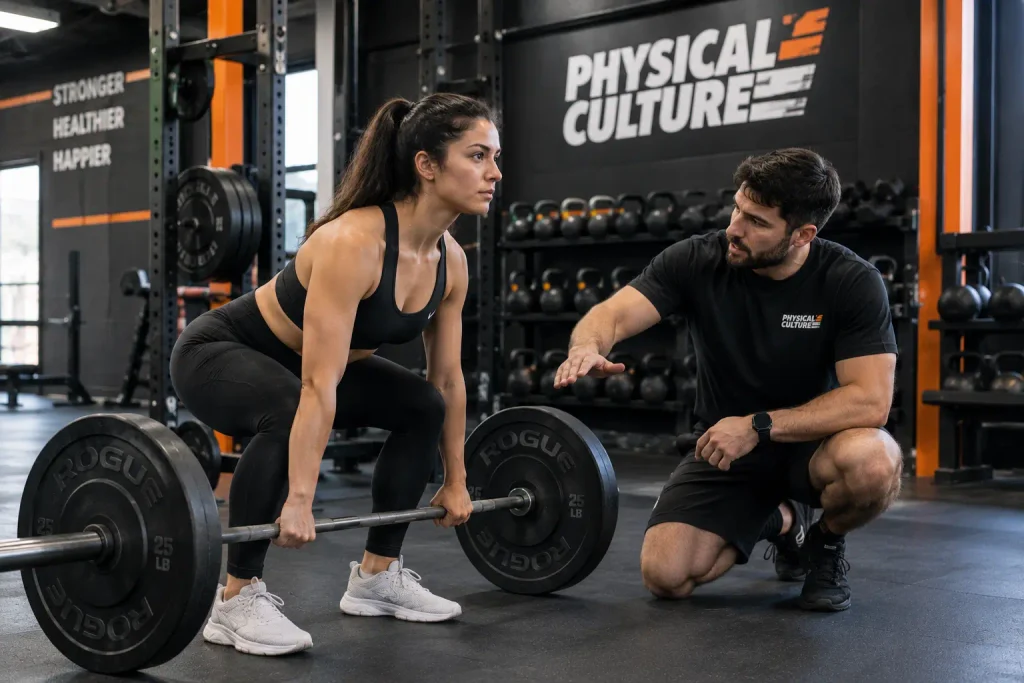
To improve body composition, build muscle with strength training, eat enough protein and sleep well. Add a modest calorie deficit only if fat loss is your goal.
- Get a baseline. Take a body composition test so you know your starting body fat percentage and muscle mass.
- Strength train at least two days a week. That’s the federal muscle-strengthening guideline, yet the CDC found only 22.5% of US adults met both the strength and aerobic guidelines in 2022.
- Eat protein at every meal. Lean muscle mass can’t grow without the raw material.
- Keep any deficit modest. Crash diets speed up fat loss on paper but cost you muscle mass in the process.
- Protect your sleep and hydration. Recovery is when muscle actually gets built.
- Retest every 8 to 12 weeks. Use the same device and the same conditions each time.
Losing fat and gaining muscle at the same time is called body recomposition. It’s common in beginners and people returning to training. Our full guide to body recomposition explains how to run it.
Want to know your numbers? Every program at our gym starts with a physical assessment that includes an InBody 580 scan, grip strength and a movement screen. See how our body composition coaching works, or take our free 5-minute fitness evaluation first.
Frequently asked questions
What is good body composition?
A good body composition means carrying enough muscle to stay strong and active, with body fat in a healthy range for your sex. For most adults, that’s roughly 14% to 24% body fat for men and 21% to 31% for women.
Low visceral fat and steady or rising muscle mass with age are just as important as the headline number.
How accurate is an InBody body composition test?
An InBody test is accurate enough to track change over time, but it’s less precise than a DEXA scan for absolute numbers. Readings shift with hydration, food and recent exercise.
Test under the same conditions every time and focus on trends across several scans rather than one result.
Can you change your body composition without losing weight?
Yes. If you lose fat and gain muscle at the same rate, your weight can stay flat while your body composition improves. This is body recomposition, and it’s why the scale often misleads people who just started lifting.
Waist measurements, strength numbers and a body composition test will show progress the scale can’t.
Is body fat percentage more important than BMI?
For an individual, yes. Body fat percentage tells you how much of your weight is fat, while BMI only compares weight to height. That’s why the AMA recommends using BMI alongside body composition measures.
BMI still works as a quick screening tool for large groups.
What is skeletal muscle mass on a body composition test?
Skeletal muscle mass is the weight of the muscles attached to your bones, the ones you move and train. It’s different from lean body mass, which also counts organs, bone and water.
Rising skeletal muscle mass on your scans is one of the clearest signs your training is working.
How often should you test your body composition?
Every 8 to 12 weeks is enough for most people. Body composition changes slowly, so weekly scans mostly show noise from hydration and food. We retest clients at least quarterly, using the same equipment and conditions.
The bottom line
Body composition tells you what your weight is made of, and that’s what actually predicts health, strength and how you age. BMI and the scale can’t separate muscle from fat. A body composition test can.
Start with a baseline, train for muscle, and judge progress by your trend. If you’re in Brooklyn, visit us at 55 9th Street, Unit 4A, in Gowanus, or book a free 15-minute consult to get your numbers.