What you need to know
- A personal trainer is worth it when your real problem is consistency, technique or a plan, not a lack of information.
- In a 2025 randomized trial, 88.2% of coached lifters stuck with their program, compared with 52.2% of people following a self-guided PDF plan.
- The coached group also gained more squat strength and lean mass. Simple lifts like the bench press showed no real difference.
- Beginners, people coming back from injury and anyone stuck at a plateau get the most value from each session.
- It is not worth it if you skip sessions, or if your trainer writes workouts without assessing you first.
- At our Brooklyn gym, private sessions cost $170 to $200 each as of October 2026, with gym access, programming and nutrition coaching included.
Most people who ask “is a personal trainer worth it?” I already know how to do a squat. What they don’t know is why two years of workouts left them looking and feeling exactly the same.
That gap is usually the answer. Information is free. Execution is what you pay for.
The numbers back that up. According to the CDC, only 22.5% of US adults met both the aerobic and muscle-strengthening guidelines in 2022.
The short answer: yes, a personal trainer is worth it if you need structure, accountability or technical coaching to make progress, and you can commit to showing up. Research on supervised training shows better adherence and bigger strength gains. If you already run a structured program consistently, a monthly check-in may be enough.
Written by Brian Velez, owner of Physical Culture, a private coaching gym in Gowanus, Brooklyn. We opened in 2019, and our team of 8 specialist coaches has earned more than 140 five-star reviews.
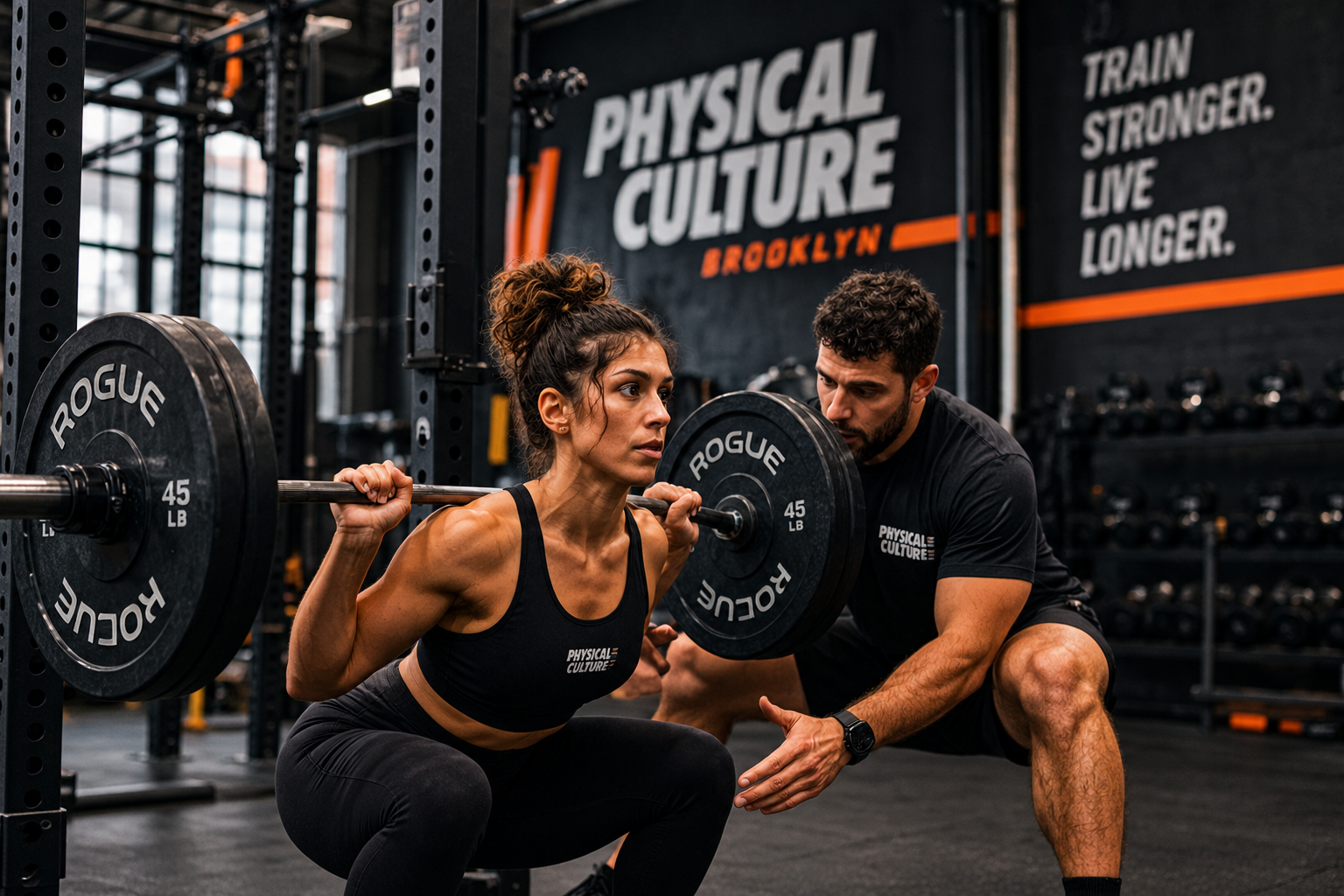
| IMAGE SLOT | Hero (after the H1) |
|---|---|
| Suggested subject | A Physical Culture coach spotting a client’s barbell squat on the Gowanus training floor |
| Filename | personal-trainer-worth-it-coach-spotting-squat-brooklyn.jpg |
| Alt text | Personal trainer spotting a client during a barbell back squat at Physical Culture gym in Gowanus, Brooklyn |
Is a personal trainer worth it? What the research actually says
The research says yes for most people, mainly because coached lifters train harder and skip fewer sessions. The benefit is real but moderate, so it pays off only when you show up.
The best-known study came from Ball State University in 2000. In the Mazzetti study, moderately trained men ran the same 12-week program with or without a personal trainer.
The coached group increased their loads faster and finished with greater maximal strength. Same program, same men, different results.
A newer trial makes the case even clearer. The 2025 randomized trial by Gavanda and colleagues split 79 trained adults into three groups for 10 weeks: in-person coaching, an app, or a PDF plan.
- Adherence: 88.2% of the coached group hit the attendance target, compared with 81.2% for the app and 52.2% for the PDF.
- Squat strength: the coached group added about 26.6 kg to their squat, versus roughly 19 kg in the other two groups.
- Lean mass: only the coached group gained a meaningful amount of fat-free mass, about 1.4 kg.
That matches an earlier study of health club members by Storer and colleagues in 2014, where supervised training built lean body mass and self-directed training didn’t.
Younger athletes show the same pattern. In a study of young rugby league players, the supervised group completed more sessions and made larger strength gains.
Here’s the honest caveat. A 2022 meta-analysis cited in the Gavanda paper found that supervision gives small to moderate benefits overall, not miracles.
Think of a trainer like a GPS on a road trip. You could get there with a paper map, but you’d take more wrong turns and probably arrive later.
We’ll be straight with you: the trainer isn’t the magic part. The appointment on your calendar is, which is why how we coach starts with a recurring weekly slot.
What are the real benefits of a personal trainer?
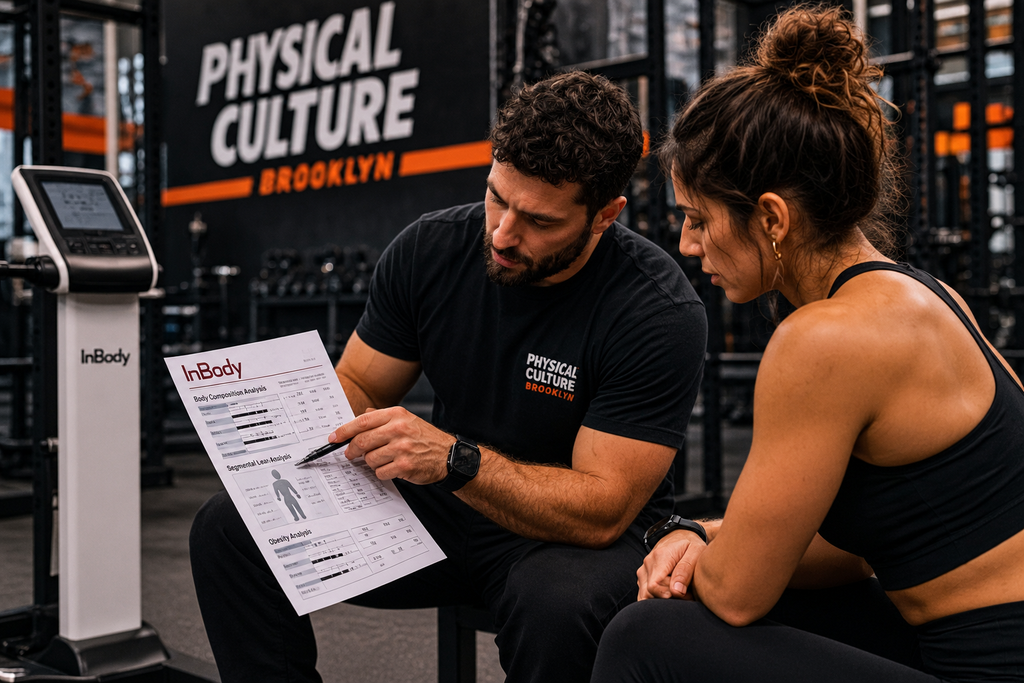
The main benefits of a personal trainer are a plan built for your body, someone checking your technique, and a reason to keep showing up. Everything else grows out of those three.
Here are the personal trainer benefits that actually move results:
- Accountability and motivation: a booked session is harder to skip than a vague intention. Adherence, meaning how consistently you follow a plan, is the biggest predictor of results we see.
- Exercise form and injury prevention: a coach catches the knee cave or rounded back you can’t see in the mirror. Complex lifts benefit the most.
- A training program based on a fitness assessment: good coaches test before they write anything. Ours start with InBody body composition, grip strength and a movement screen.
- Progressive overload done right: progressive overload means adding a little load or volume over time. A trainer adds it at the right pace, not too fast and not too slow.
- Periodization: periodization is planning training in phases, like a school curriculum that builds from basics to exams. It keeps you progressing for years instead of weeks.
- Breaking a plateau: a plateau is when progress stalls despite steady effort. Fresh eyes usually spot the missing variable quickly.
- Nutrition coaching and habit building: training only works if sleep, food and stress support it. Habit building is what makes the results last after the program ends.
So why hire a personal trainer instead of downloading a program? Because a program can’t watch your exercise form, and it can’t adjust when your knee flares up.
Wade, a client for three years, came to us as a middle-aged lifter working around injuries from poor programming. His coach adjusted around those setbacks so he could keep chasing his body composition goals.
That’s injury prevention in practice. You can read more stories like his on our client results page.
Personal trainer vs working out alone: which gets better results?
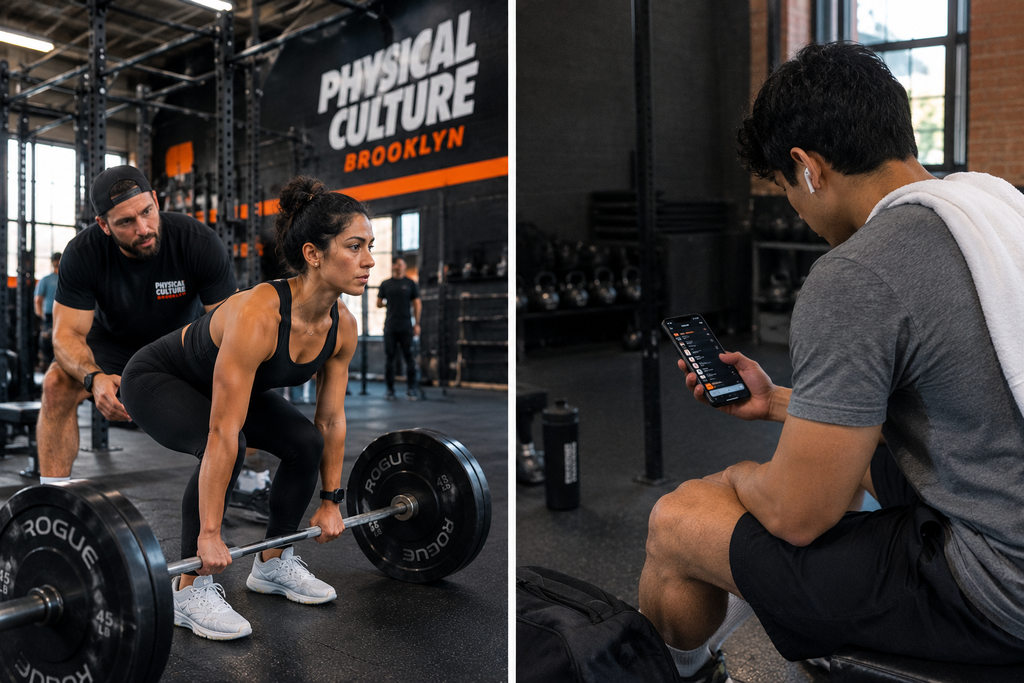
Training with a personal trainer usually gets better results than working out alone, especially on complex lifts and for people who struggle with consistency. Working alone wins on cost and flexibility.
| Factor | With a personal trainer | Working out alone |
|---|---|---|
| Training program | Built from your assessment and history | Generic plan from an app or the internet |
| Exercise form feedback | Real time, every rep that matters | Mirror, video or guesswork |
| Load progression | Adjusted session to session | Often too fast or too cautious |
| Adherence | 88.2% met the attendance target in the 2025 trial | 52.2% on a self-guided PDF plan |
| Complex lifts (squat, deadlift) | Larger strength gains in research | Smaller gains |
| Simple lifts (bench press) | Similar gains | Similar gains |
| Cost | Higher | Low or free |
| Schedule | Fixed session times | Fully flexible |
The pattern is useful. Supervision matters most when a movement is technical, when injury prevention is a priority, or when motivation is the weak link. If you’re experienced and consistent, the gap narrows a lot.
Your training age also matters here. Training age is how many years you’ve trained with a real structure, not how long you’ve owned a gym membership. Someone with a low training age gets far more from each coached session.
Should you get a personal trainer? A quick decision framework
If you’ve typed “should i get a personal trainer” into a search bar, the honest answer depends on your history. You should get a personal trainer if you’ve tried training alone and stalled, you’re returning from an injury, or you’ve never followed a structured program. Use the table below to find your starting point.
| If this sounds like you | Our recommendation |
|---|---|
| You’ve never followed a structured program | Start with 2 coached sessions a week for the first 2 to 3 months |
| You’re coming back from injury or surgery | Coached sessions, coordinated with your physical therapist |
| You’ve trained for years but stopped progressing | 1 session a week, or every other week, for program and technique |
| You’re experienced and self-directed | A monthly check-in, or open gym with your own program |
| Your biggest problem is time | Fewer, more focused sessions with homework between them |
If you’re finishing rehab, our guide on what to do after physical therapy ends walks through that handoff.
When is a personal trainer not worth it?
A personal trainer isn’t worth it if you won’t show up, or if the trainer skips the assessment and hands you a template. Watch for these red flags:
- No questions about your injuries, medical history or schedule before the first workout.
- The same workout every week, with no progression or retesting.
- Counting reps instead of correcting technique.
- No plan for what you do between sessions.
Not sure where you land? Take our free 5-minute fitness evaluation.
We’ll send back your three biggest priorities. You might even find out you don’t need a coach at all.
Do personal trainers help you lose weight?
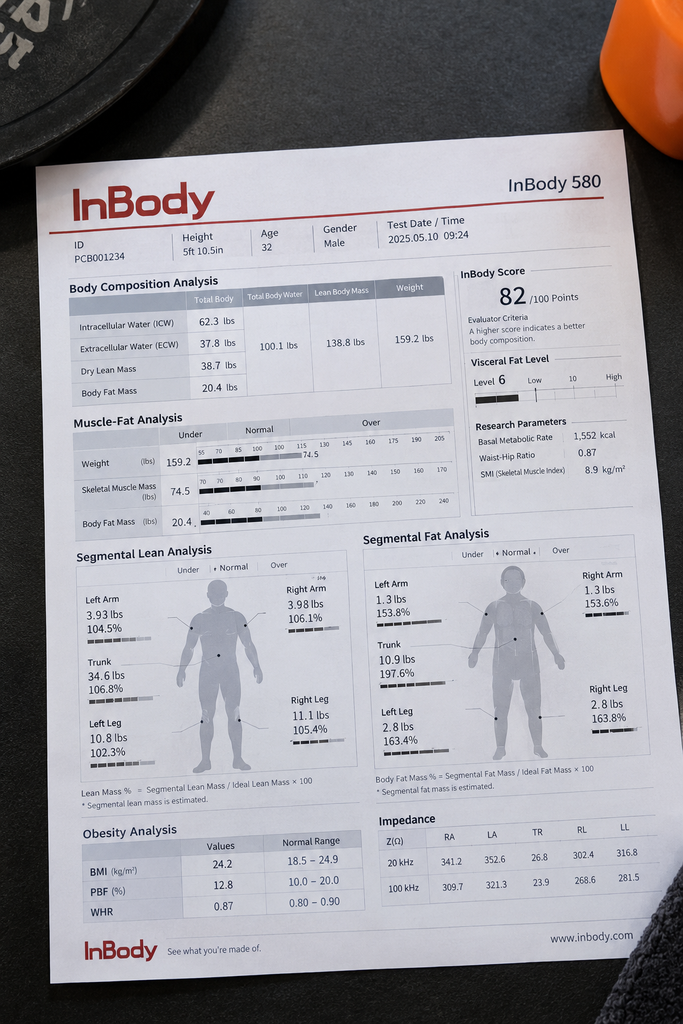
Yes, personal trainers help you lose weight, but mostly by improving consistency, building muscle and coaching your nutrition. Exercise alone rarely moves the scale much.
The 2025 Gavanda trial showed this clearly. Participants trained hard for 10 weeks without changing their diets, and fat mass didn’t drop in any group. Training builds muscle. Fat loss needs food changes too.
That’s why we track body composition instead of body weight. The scale can’t tell muscle from fat, but an InBody scan can.
Diana, who has trained with us since 2021, spent years doing cardio and HIIT without getting stronger. With her coach, she learned how to build strength properly and how nutrition shapes body composition. Strength training is the piece most weight loss plans leave out.
If fat loss is your main goal, read our honest take on whether a weight loss coach is worth it, or see how our body composition coaching works.
Is a personal trainer worth it for beginners?
A personal trainer for beginners is often the best fitness money you’ll spend. The first few months set your technique, habits and confidence for years.
Shruti came to us as a newcomer to weightlifting. With her coach as her guide, she worked through her fears in the gym and racked up one successful first after another. That kind of early progress is what keeps beginners training long term.
For a deeper look at finding the right coach locally, see our guide to personal training in Brooklyn.
How often should you see a personal trainer?
Most people should see a personal trainer one to three times a week, depending on their goal, experience and budget. More sessions usually mean faster results.
- 2 to 3 sessions a week: beginners, rehab, or a big goal like a competition.
- 1 session a week: busy professionals who train on their own between sessions.
- Every 2 to 4 weeks: experienced lifters who need program updates and a technique check.
Here’s what seven years of coaching has taught us: the clients with the most success do the most sessions, because execution is the difference. Even our once-a-month clients get real value, though, from a regular reassessment that keeps their effort pointed in the right direction.
Cost shapes frequency for most people. At Physical Culture, private sessions run $170 to $200 each as of October 2026, with gym access, programming and nutrition support included.
See our full pricing, or compare the market in our breakdown of how much a personal trainer costs in NYC.
As our owner Brian puts it on our pricing page: “If you’re shopping on price, you’re solving the wrong problem.”
How do you make personal training worth the money?
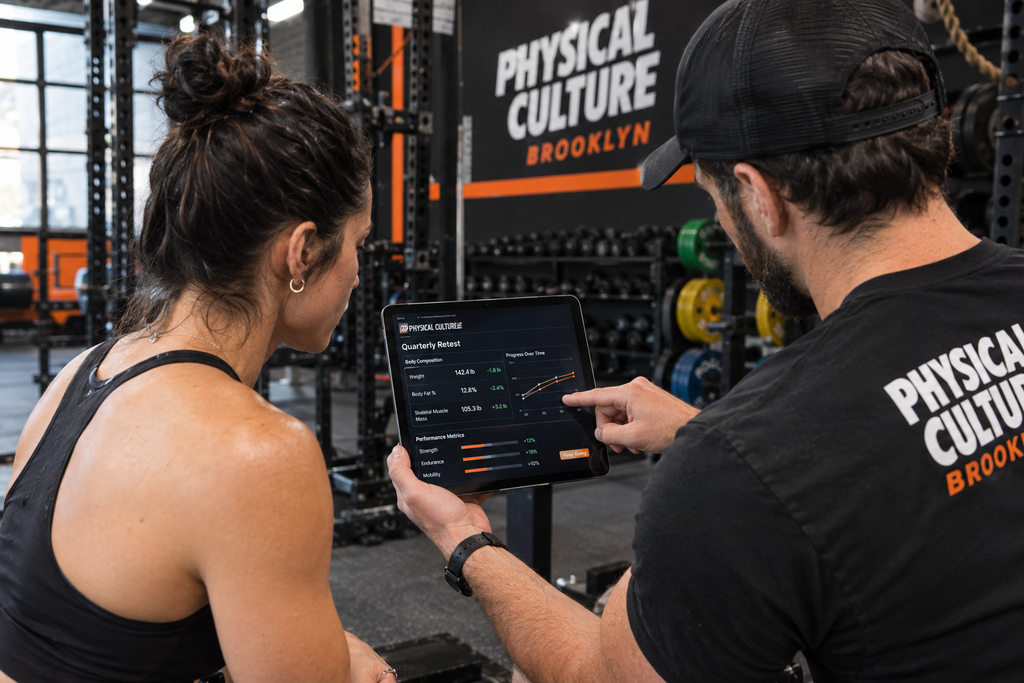
To make personal training worth the money, start with an assessment, set one measurable goal and book a recurring slot. Then do the work between sessions.
- Start with a fitness assessment, not a workout. Your program should be built on your history, body composition and movement screen.
- Set one measurable goal. Goal setting works best with a number, like a deadlift target or a body fat percentage. Good goal setting also includes a date.
- Book a recurring weekly slot. Busy people keep schedules they don’t have to rethink.
- Do the homework. Train between sessions, sleep, and hit your protein. The session is the steering, not the engine, and habit building happens between visits.
- Retest every quarter. Same tests, same equipment, so you can see what moved.
- Tell your coach when life changes. A deadline week or a new baby should change the plan, not end it.
At our gym, one lead coach owns your program and knows your history, while the wider team covers sessions and specialties as your goals change. You never start over.
Want to know if coaching makes sense for you? Book a free 15-minute consult. No script, no hard sell. We’ll tell you honestly if we’re the right fit.
Frequently asked questions
Is it worth getting a personal trainer once a week?
Yes, one session a week is worth it if you train on your own between sessions. That weekly session sets your program, corrects your technique and keeps you accountable all week.
It works especially well for busy professionals and intermediate lifters. Beginners usually progress faster with two sessions a week for the first couple of months.
How long does it take to see results with a personal trainer?
Most people notice strength and energy changes within 4 to 6 weeks of consistent training. Visible body composition changes usually take 8 to 12 weeks, and longer if nutrition isn’t dialed in.
In the 2025 Gavanda trial, coached lifters made clear strength and lean mass gains in just 10 weeks. Quarterly retests show progress a mirror often misses.
Can you use a fitness app instead of a personal trainer?
An app is better than nothing, but it can’t watch you move. In the 2025 Gavanda trial, the app group had good adherence (81.2%) but gained less squat strength and no lean mass.
A hybrid often works well. Book a few in-person sessions to set your technique, then follow remote programming with video check-ins.
Is a personal trainer worth it if you already know how to lift?
It can be, mainly for programming and blind spots. Experienced lifters often plateau because they repeat what worked years ago.
A coach adds periodization, objective testing and a second set of eyes on your technique. You probably don’t need weekly sessions, though. A check-in every two to four weeks is often enough.
Do personal trainers help with nutrition?
Good personal trainers coach nutrition basics like protein targets, food quality, sleep and stress. At Physical Culture, nutrition and lifestyle coaching is included in every program, and we can go as detailed as full macros.
For medical nutrition needs, such as diabetes or an eating disorder, a registered dietitian should lead.
What results can you expect from a personal trainer?
Realistic personal trainer results include better technique, steady strength gains, improved body composition and fewer injuries. Our clients have come back from surgery, trained through pregnancy and changed bodies that wouldn’t budge.
Results depend mostly on attendance, effort between sessions and nutrition. A good coach makes all three easier.
The bottom line
A personal trainer is worth it when consistency, technique or a lack of structure is what’s holding you back. The research backs it up: coached lifters attend more sessions, lift heavier and gain more muscle than people training on their own.
It isn’t worth it if you won’t commit to the schedule, or if the trainer skips the assessment. Choose a coach who tests first, plans your strength training in phases and retests your progress.
If you’re in Brooklyn and want an honest answer for your situation, visit us at 55 9th Street, Unit 4A, in Gowanus, call (917) 946-3000, or start with our free consultation. Here’s how our coaching works from your first call to your first retest.
Last updated: October 20, 2026. This article is for general education and isn’t medical advice. If you have a heart condition, recent surgery or another health concern, check with your doctor before starting a new exercise program.